
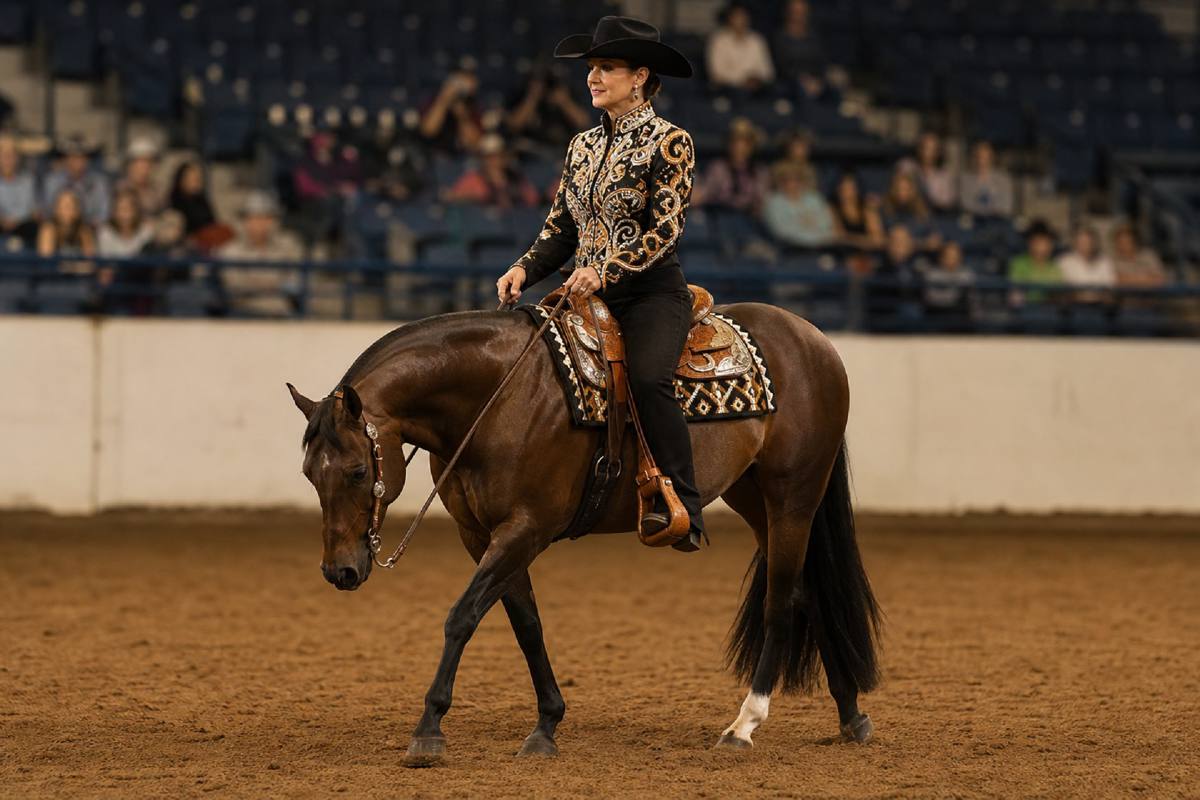
Watch the full episode here if you want to follow along with the class I’m analyzing and compare the horses for yourself.
Western pleasure can be one of the most polarizing classes in the arena, and I wanted to use this episode to help riders build a better eye for what I actually value: a horse that is free, true, clean, and pleasant to watch. I’m not trying to turn everyone into a judge. I’m trying to help you recognize when a horse is moving correctly, when a horse is being over-constrained, and when a horse deserves more credit for moving forward honestly.
What matters most to me is the foundation underneath the pattern. If I can see how a horse is carrying itself, where the energy is coming from, and whether the movement stays organized from front to back, I can start to sort out what belongs near the top of the class and what doesn’t. For the full class breakdown, watch the episode and compare each horse to the notes below.


What you need first
Before this lesson makes sense, you should already be comfortable with:
- Lunging foundation: I expect you to understand how forward energy and rhythm show up before you ever ask for a polished frame.
- Transitions under saddle: In western pleasure, the quality of the gait depends on how well the horse changes, balances, and stays consistent through the transition.
- A basic understanding of how to evaluate straightness, balance, and self-carriage.
If you’re missing those basics, this episode is still useful as an eye-opening preview, but it will make even more sense once your horse is consistently moving in a relaxed, organized way.
My goal when I evaluate a western pleasure class
When I watch a class like this, I’m not looking for the freakiest horse in the pen. I’m looking for the horse that can appeal to the widest range of judges while still staying correct. That means I want to see:
- forward motion without rushing,
- a clean front end,
- a solid, steady topline,
- and a horse that looks comfortable in its own body.
I also want riders to understand that results are never perfectly predictable. You can do a lot right and still not get the placing you wanted. That’s why I always tell people not to become overly results-driven. I’d rather you focus on developing the horse that actually moves well than obsessing over a ribbon.
Why I like free, true, and clean movement
The phrase I keep coming back to in this lesson is free, true, and clean. That’s the kind of movement I want riders to recognize first.
A horse that is free moves with enough purpose that it doesn’t look trapped. A horse that is true travels honestly, without wobbling, drifting, or faking the stride. A horse that is clean stays organized enough that the front and hind end work together instead of fighting each other.
When a horse has those pieces in place, it usually looks more pleasant, more functional, and more sustainable as an all-around horse. That’s especially important because not every flashy mover is easy to develop into a horse that can also handle horsemanship, western riding, or other all-around work.
How I read the front end
One of the clearest things I’m watching in western pleasure is the front leg. I want to know whether the horse is placing that leg cleanly or whether it’s getting ahead of itself.
In this class, I point out examples where a horse:
- lands toe-first or stubs the front end,
- reaches too far and loses balance,
- or keeps the front end organized and level enough to stay pleasant.
That front-leg quality tells me a lot about the horse’s balance behind the scenes. If the horse is falling onto the forehand, you usually see it in the way the front foot lands. If the horse stays balanced, the stride tends to look more even and more complete.
Why I care about forward motion
This is the part of the lesson I want riders to really absorb: forward movement is not automatically wrong.
I do not want to punish a horse simply because it looks like it is moving out more than the rest of the class. If a horse is moving forward, staying true, and remaining organized, I think that deserves credit. In fact, one of the reasons I made this video was to show how often a horse gets marked down for being honest and active, even when the movement is cleaner than the horses around it.
That doesn’t mean every horse should run at the same speed or get bigger for the sake of being bigger. It means I want the movement to be intentional, balanced, and allowed to happen instead of being strangled into a frame that makes the horse look dull or unhappy.
The horses I favor in a class like this
As I walk through this Congress class, I’m looking at each horse through the same lens: Does it stay free? Does it stay true? Does it remain clean enough to be judged fairly against the rest?
A horse can be a little more round and compact and still appeal to me if it’s carrying itself well. Another horse might move out more and catch my eye because it looks genuine, happy, and unconstrained. What I’m not interested in is a horse that has to sacrifice its topline, front end, or rhythm just to fit a style.
That’s where a lot of riders get stuck: they assume the most compressed shape is always the best shape. I don’t agree. Sometimes the better horse is the one that’s allowed to show more natural motion.
The kind of problems I’m trying to help you spot
In the class, I point out a few common issues that show up again and again:
- the outside front stepping too far forward,
- the horse getting behind or crossing in front where it shouldn’t,
- the inside front landing a little stubby,
- the face tipping toward the rail,
- or the horse getting tight, unhappy, or over-packed in the bridle.
These are the details that separate a horse that merely survives the pattern from a horse that looks polished and correct. If you can train your eye to see those differences, you’ll make better choices at home and at the show.
Why I want a horse to look pleasant
Pleasantness matters more than people admit. I want a horse that is nice to watch. That doesn’t mean the horse has to be dead quiet or overly slow. It means the horse should look like it is comfortable doing its job.
When a horse looks pinned, defensive, or irritated, that often tells me the picture is too forced. When the horse looks open, willing, and balanced, I’m usually more interested in it—even if it’s not the flashiest horse in the class.
That’s also why I push riders to think about consistency. If you can make your horse consistent and clean, you give yourself a much better chance of appealing to more judges, even when judging preferences vary.
Practical takeaways
Here’s the simple version of what I want you to remember:
- Don’t chase the most extreme style if it costs your horse balance or cleanliness.
- Learn to recognize free, true, and clean movement before you worry about placings.
- Don’t assume forward movement is a fault; evaluate whether it stays organized.
- A horse that looks pleasant, honest, and consistent will usually hold up better over time.
- If a horse looks better when it is allowed to move more freely, that matters.
For a closer look at the individual horses I’m discussing, watch the episode and pause on the moments where the front end, frame, and balance change.
What to practice next
If you want to apply this lesson in your own riding, I’d suggest this progression:
- Build or refresh your lunging foundation so you can recognize rhythm and forwardness on the ground.
- Check your transitions under saddle for balance, not just shape.
- Watch your horse travel on a loose enough connection to tell whether it moves more freely or more honestly.
- Compare your horse against the ideas in this class: free, true, clean, and pleasant.
- Keep a notebook of what changes when your horse is allowed to travel a little more forward versus when it is over-collected.
If you want more context on how I’m thinking through the class, use the chapter links in the episode description and compare the examples to your own horse. That’s how you start developing an eye that actually helps your training.
In the end, my message is simple: I want the industry to reward horses that move well, stay honest, and look happy doing it. That starts with riders learning to see the difference.
Support this writer
If this article helped you, leave a one-time tip.


