
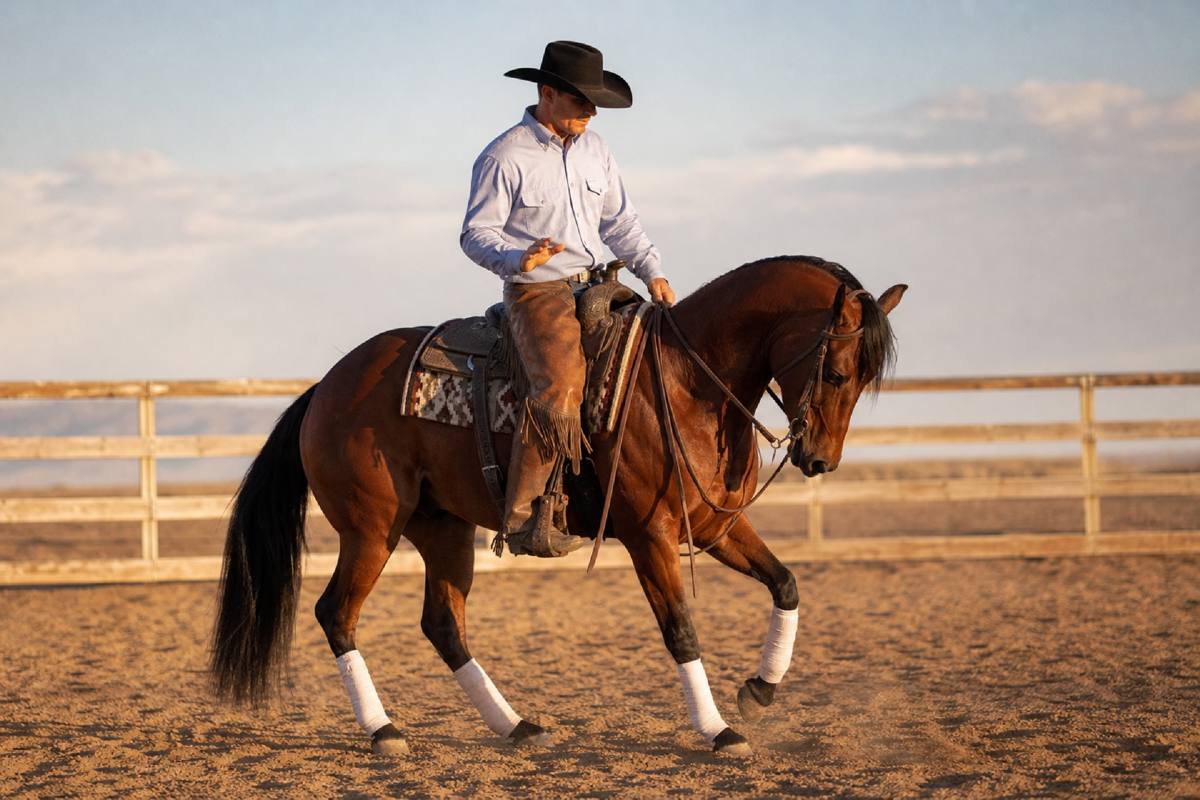
Backing Well Under Saddle
When I start a horse, I want to know two things right away: can I control the shoulders, and can I keep the horse between my hands and my feet? In this lesson, I use the backup to show how those pieces connect. A good backup is not just about moving backward — it tells me whether the horse is staying straight, staying soft, and staying connected through the body.
For the full walkthrough and on-horse examples, watch the episode here: https://www.youtube.com/watch?v=HsA7G_nFh6w


What you need first
Before I ask for this work, I want the basics in place:
- solid transitions under saddle
- a horse that understands direct steering and shoulder control
- a feel for using the outside rein without overbending the neck
- enough comfort under saddle to stay patient while I sort out the response
If those pieces are still coming together, I treat this lesson as a preview of what we’re building, not something to rush.
Start by evaluating what the horse already knows
The first thing I do is feel for the horse’s grade. I don’t assume the response is finished just because he can back a step or turn a corner. I want to know whether the movement stays fluid. If the steps get sticky, dull, or uneven, that tells me I’ve lost something in the body.
That’s the standard I use here: if the horse can’t stay fluid in a simple backup, he won’t stay fluid in a stop, a turn, or a lope transition either.
Backup, then turn: don’t let the shoulders drift
One of the biggest ideas in this lesson is that I don’t want the horse turning on the forehand when I back him. I want the turn to come from over the hindquarters. That means the shoulders stay organized, the back end stays engaged, and the horse doesn’t just swing the front end around to escape the work.
If I ask for a turn without enough preparation, the horse may spin the front end or dump weight onto the shoulders. Instead, I use the backup to tell him: stay with me, keep the body together, and move the feet in a way that stays correct.
That’s why I’m so focused on the feeling of one-two, one-two. The second that rhythm breaks, I know I’ve lost the shape I want.
Use the outside rein to lift and direct the shoulders
As I get more specific, I bring in the outside rein. I want that rein to act like a clear signal: not a crutch, not a pull, but a way to say, “keep the shoulders up and come around.”
The key is that I’m not asking the inside rein to do all the steering. If I pull too much inside, I can twist the neck and let the shoulder fall out. Instead, I keep the inside side freer and use the outside rein to organize the turn and maintain straightness where I need it.
When the horse understands that pressure, I can ask him to turn without losing the body shape. That’s a huge part of building a better backup and a better rollback later on.
See this segment for more detail on the outside-rein connection and how I use it to keep the horse straight: https://www.youtube.com/watch?v=HsA7G_nFh6w&t=508s
Backing with the neck low and the body connected
Once I have the basic response, I ask for more: back while staying down into my hands. I don’t want the horse popping his head up every time I back. When the head rises, something else is usually dropping away from me — often the withers, the back, or the engagement through the body.
That’s why I ask for the backup with softness through the neck and with the shoulders still available. I want the horse to stay round and connected, not braced and hollow.
If the horse raises his head or gets stuck, I don’t treat that like a fight. I treat it like information. He’s telling me the task is hard, and I need to help him find the answer. Sometimes that means I pause, settle, and let him process before I ask again.
Why this matters for turns, circles, and lope transitions
This is where the lesson gets really important for reining and horsemanship work. I’m not backing just to back. I’m backing to improve the way the horse carries himself in every other maneuver.
When I can back, turn, and keep the shoulders organized, I can help the horse lift into transitions instead of springing forward crooked. That’s useful when I’m working toward smoother circles, cleaner lope departures, and a horse that can stay balanced as I change direction.
I also pay attention to pace. I want the work done in the range where the horse can stay steady and correct. If I go too slow and the rhythm falls apart, I lose the quality I’m trying to build. So I choose a tempo where the horse can stay sure of himself and keep learning.
For more detail on how I connect outside-rein steering to backing, circles, and lope work, watch this section: https://www.youtube.com/watch?v=HsA7G_nFh6w&t=760s
Practical takeaways
Here’s what I want you to remember from this lesson:
- A good backup starts with control of the shoulders.
- The backup should stay fluid; if it gets sticky, something in the body is out of place.
- The outside rein helps me direct the horse without overbending the neck.
- I want the horse to back while staying round and connected, not braced and heavy.
- If the horse raises his head or stalls, I treat it as feedback and help him through it.
- Better backing leads to better turns, better balance, and cleaner transitions.
What to practice next
If you want to build on this lesson, I’d focus on these pieces in order:
- transitions under saddle with a steady rhythm
- shoulder control at walk and trot
- simple backing with straightness
- backing into a soft turn without losing the hind end
- using the outside rein to keep the horse organized
- carrying that same balance into lope departures
That’s how I think about it: not as isolated tricks, but as one connected conversation with the horse. When the shoulders stay up, the body stays soft, and the backup stays correct, everything else gets easier.
Support this writer
If this article helped you, leave a one-time tip.


