
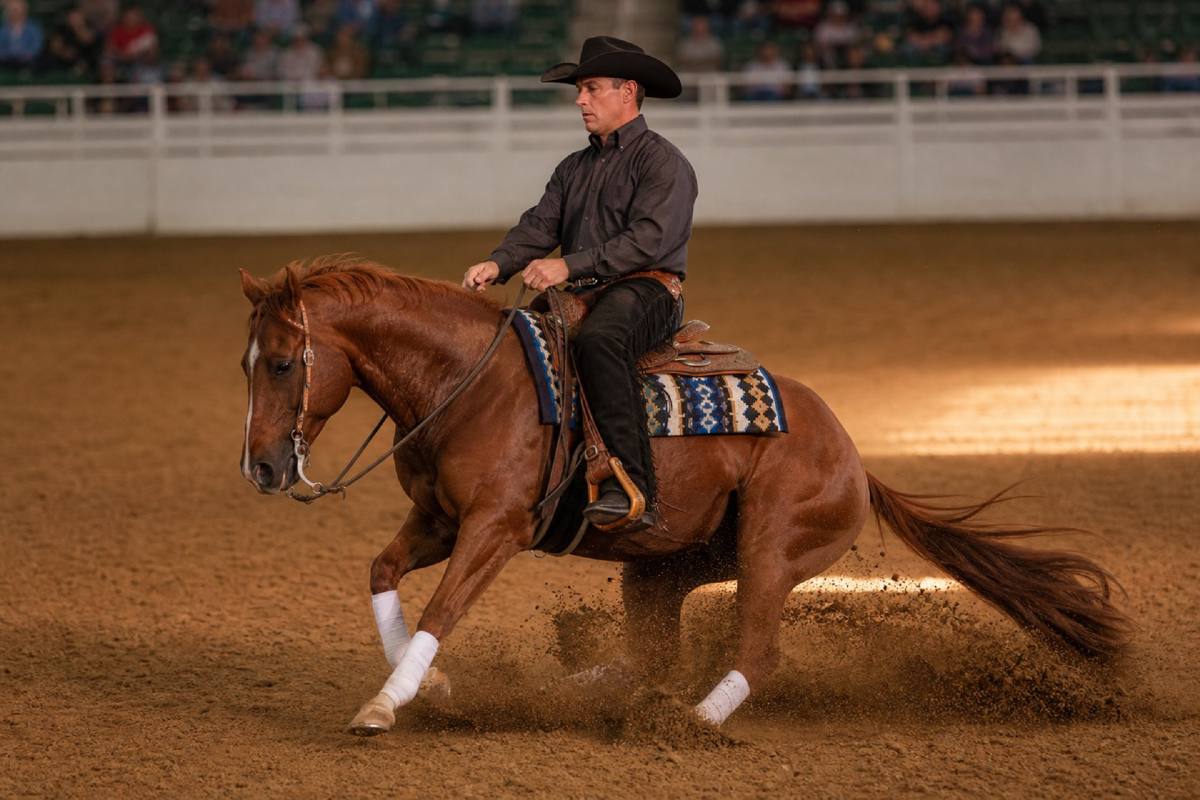
If you’re working a green horse and you want better lope departures, more control through the body, and a quieter mindset during transitions, this lesson is for you. In the full episode, I work through the horse’s tendency to brace, rush, and get tight when I ask for a change in balance, then I show how I keep him soft enough to learn instead of just survive the exercise. For the full walkthrough, watch the episode here: https://www.youtube.com/watch?v=AhkfCa--N9I


What you need first
Before you ask for this kind of work, I want you to already have a basic feel for:
- forward motion and moving freely off your leg
- simple under-saddle transitions without getting defensive
- circles and a horse that can stay with you in a curve
- a basic simple lead change or lead understanding that helps you organize the body
If your horse is still learning to move forward willingly, keep that foundation simple first. This lesson is about refining the lope departure and using the circle to shape the hind end, not about forcing a horse that doesn’t yet understand the basics.
Start with the horse’s mind, not just the maneuver
When I ask for a lope departure, I’m not looking only for a clean first step. I’m watching whether the horse stays mentally available while the back end organizes itself. If he gets tight, swishy, or starts pushing into my hand, that tells me he’s still processing the request. That’s fine. My job is to stay fair, stay quiet, and let him work through it without turning the ride into a fight.
A lot of riders make the mistake of getting bigger, harder, or faster when the horse feels resistance. I want the opposite. I want to give the horse a clear request, then give him room to answer it. If he doesn’t get it right away, I simply ask again in the same calm way.
Build the lope departure from softness
My first focus in this episode is the departure itself. I want the horse to step up into the lope without popping his shoulders, tightening his back, or losing the feel in his body. If he wants to brace, I don’t reward that. I keep him working, but I keep the ask simple.
What I’m after is a horse that can:
- step cleanly into the lope
- stay round enough through the body to balance himself
- accept my leg and seat without hollowing
- relax after the transition instead of staying worked up
A good lope departure isn’t just about speed or power. It’s about whether the horse can stay with me through the change of gait and then settle back to me afterward.
Use the circle to shape the hip
Once the horse is moving, I use the circle to help control the hind end. If the hip drifts out or the horse starts to get crooked, I don’t let him rehearse that mistake. I push it back around and keep the shoulders and hips organized on the line I want.
That’s the big idea here: I’m not trying to punish the horse for getting tight. I’m helping him find the answer. If he braces on one stride, I keep the pressure consistent enough for him to think, then I give when he softens. That is how I teach him that softness, not resistance, is what works.
This is also where riders often need to be patient. A horse may look like he’s doing the right thing on the surface, but if he’s still pushing into the hand or carrying tension in the back, he isn’t truly comfortable yet. I want the horse to get to the point where the circle feels smooth, balanced, and willing.
For the full on-horse example of this piece, see the segment around the lope work here: https://www.youtube.com/watch?v=AhkfCa--N9I&t=9s
Don’t stop at “not wrong”
One of the most important ideas in this lesson is that I don’t stop when the horse merely quits making mistakes. I keep going until the response feels soft and comfortable. That matters because a horse can be technically correct and still be mentally braced.
I want riders to think in layers:
- Did the horse understand the request?
- Did the horse stay out of a fight?
- Did the horse soften in the body?
- Did the horse finish the movement without tension?
That last layer is where real quality starts to show up. A lot of training lives in that in-between space where the horse is no longer resisting, but not yet relaxed. That’s where I keep working with patience.
How I handle a horse that wants to rush or brace
If the horse gets quick, I do not want to chase him into being more reactive. I stay quiet, reorganize the body, and let the horse discover that being softer is easier. If he pushes through my hand or tightens against my leg, I address the balance by returning to the same question instead of escalating the argument.
That approach matters especially with a green horse, because the more you rush the correction, the more likely you are to create a horse that anticipates pressure and braces before you even ask. I’d rather repeat the right idea several times in a calm way than make one big correction that shuts the horse down.
Counter-canter preparation through hip control
As the horse progresses, this same hip control becomes part of more advanced work like counter-canter preparation. I’m not asking a green horse to do advanced maneuvers too soon, but I am laying the groundwork by teaching him to stay on a circle, stay organized through the body, and keep the hind end available.
That’s why I pay attention to whether the horse can hold the line without squatting, leaning, or tightening. If the hip can stay underneath him and the shoulders stay with the arc, I’ve got a horse that is starting to understand body control instead of just surviving the pattern.
Practical takeaways
Here’s what I want you to remember from this lesson:
- Stay calm when the horse is learning something new.
- Reward softness, not just obedience.
- Use the circle to keep the hind end organized.
- Don’t increase pressure just because the horse gets momentarily resistant.
- Repeat the question until the horse can answer it softly.
- Finish when the horse relaxes, not when he merely stops objecting.
This is the kind of work that makes a horse better over time. It may not look flashy in the moment, but it creates the control, balance, and willingness that good reining horses need.
What to practice next
Once your horse can handle this kind of work, keep building on:
- smooth under-saddle transitions
- lope departures with less brace and more lift
- staying round and balanced on a circle
- keeping the hip underneath the body instead of swinging out
- relaxing after the request instead of carrying tension forward
If you want the full picture, including the exact timing and the on-horse feel of each correction, watch the episode here: https://www.youtube.com/watch?v=AhkfCa--N9I and jump to the key segment at https://www.youtube.com/watch?v=AhkfCa--N9I&t=571s for the hip-control portion.
Support this writer
If this article helped you, leave a one-time tip.


