
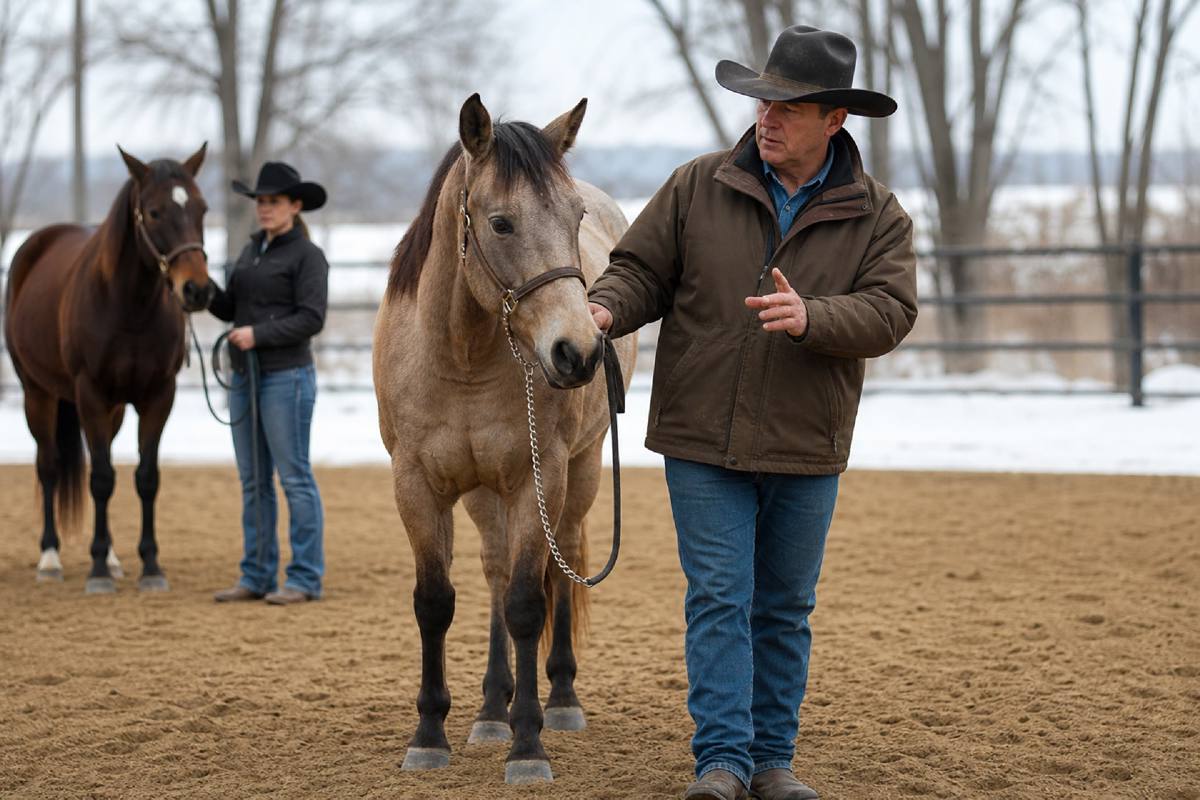
In this episode, I’m working through two ideas that connect more than most riders realize: getting a horse to step forward honestly off pressure, and using that same clarity to clean up showmanship setup, backing, and pivot control. If you want to follow the full clinic flow and watch the on-horse examples, start with the full video here: https://www.youtube.com/watch?v=bGfwyvERsU0.


What you need first
Before I ask a horse to understand this work, I want the basics in place. For the groundwork portion, that means a horse should already be comfortable with lunging fundamentals and able to move with me without melting down. For the showmanship sections, I’m assuming the horse already understands simple handling, can travel on a lead, and is ready to learn more precise body control. In the under-saddle pieces, the same balance ideas apply, but I’m using them as a preview of what good steering and shoulder control should eventually support.
Forward motion starts with balance, not force
When I teach a horse to come forward off a chain or a lead, I’m not looking to pull harder and harder. I’m looking to create a situation where the horse finds the release by stepping into the pressure instead of away from it. If I pull straight back, a horse can brace, lean, or even drag me around. If I step slightly to the side and stay consistent, I can take away the horse’s ability to just lock against me.
That’s why I like to think about this work as a balance lesson first and a compliance lesson second. When a horse goes backward or braces, I do not want to accidentally reward that by relaxing too soon in the wrong direction. I keep the pressure organized, follow the horse’s motion, and release the moment the horse chooses forward. That little change teaches the horse that forward is what makes the pressure go away.
You’ll see me use this same logic when I want a horse to load, step into a wash rack, or walk through something unfamiliar. If the horse hesitates, I don’t panic and I don’t escalate into a pulling match. I create a clearer answer: forward gets the release.
For the full walkthrough on the chain mechanics and how I avoid turning this into a tug-of-war, watch this segment: https://www.youtube.com/watch?v=bGfwyvERsU0&t=1080s.
Showmanship setup: small steps, clear shoulders, straightness
Once I move into showmanship, I’m still thinking about pressure and balance, but now I’m asking for much finer control. I want the horse to understand how to step up, stand, back, and walk off without drifting through the setup. A lot of horses get crooked because the handler moves crooked, especially when backing into position. If my shoulders swing, my horse’s body usually follows.
So I keep my own body organized. I step with intention, keep my shoulders aligned, and make sure the horse learns that my position matters. In showmanship, I want the horse’s shoulders and my shoulders to stay square to one another. If the horse hooks off to one side, I correct it early rather than letting the pattern get sloppy.
I also want the setup to stay active. I don’t want a horse to fall asleep and I don’t want to drill the horse until it hates the work. My preference is short, clear repetitions that keep the horse thinking. That way the horse stays energetic enough to respond, but not so overworked that it loses confidence.
For the opening setup and the novice pattern context, see this section here: https://www.youtube.com/watch?v=bGfwyvERsU0&t=1s, and for the warm-up, pivots, and neck position work, jump to: https://www.youtube.com/watch?v=bGfwyvERsU0&t=835s.
Backing straight is really about body alignment
One of the biggest mistakes I see is a horse backing crooked because the handler is backing crooked. If I want a straight back, I can’t let the horse swing the shoulders out or drift the hips away. I’m looking for the horse to move both sides of the body evenly, with the spine staying straight and the legs staying organized.
If a horse hooks to one side, I’ll correct that by controlling where the horse’s feet are going and by staying in line with the horse instead of letting the lead rope become a swinging contest. I want the horse to understand that backing straight is not about rushing backwards. It’s about stepping each part of the body in balance.
That same idea shows up again in the pivot. A good pivot is not just spinning around a planted foot. It’s a controlled shift of weight. I want the horse to stay balanced over the correct hind leg while the other leg steps cleanly around. If I move my body, my hand, or the chain in the wrong way, I can accidentally put the weight on the wrong foot and create a messy turn.
See this deeper discussion of straight backing and shoulder alignment here: https://www.youtube.com/watch?v=bGfwyvERsU0&t=1759s.
Pivot control depends on where the weight lives
When I talk about a good pivot, I’m really talking about managing the horse’s weight. If the horse leans too far forward, I need to help it come back into balance. If the horse leans back and braces, I need to encourage it to step forward into a lighter frame. The goal is not just to get around the turn; the goal is to control which foot carries the weight and which foot can step freely.
This is why I like to think in circles and steps instead of just “make the horse pivot.” If I keep the pattern organized, I can feel whether the horse is leaning in, leaning out, or getting sticky on one side. Then I can adjust before the horse gets lost.
A horse that understands this kind of weight control in-hand will usually carry over better into ridden work, especially when I later ask for shoulder control, smoother turns, and more exact positioning.
For the full pivot walkthrough, watch this segment: https://www.youtube.com/watch?v=bGfwyvERsU0&t=2142s.
Practical takeaways
Here’s what I want you to remember from this lesson:
- Forward motion should come from balance and release, not from a wrestling match.
- If a horse backs against pressure, I need to stay organized instead of accidentally rewarding the backward step.
- In showmanship, my own body position matters as much as the horse’s position.
- Straight backing depends on straight shoulders and steady handler alignment.
- A good pivot is really a lesson in weight placement, not just foot movement.
- Short, correct repetitions usually teach more than long, frustrating drills.
What to practice next
If you’re working at home, I’d practice in this order:
- Get your horse comfortable stepping forward off light, consistent pressure.
- Practice yielding without letting the horse brace or drift backward.
- Set up your showmanship stance with straight shoulders and clean footwork.
- Back several steps in a straight line before worrying about speed or style.
- Review your pivot work only after the horse can stay balanced and responsive in the setup.
If you want to see the full sequence and watch the exact timing of my corrections, use the main episode here: https://www.youtube.com/watch?v=bGfwyvERsU0. I always recommend watching the on-horse footage alongside the written breakdown, because the little changes in hand position, body angle, and release timing are easier to catch when you can see them live.
Support this writer
If this article helped you, leave a one-time tip.


