
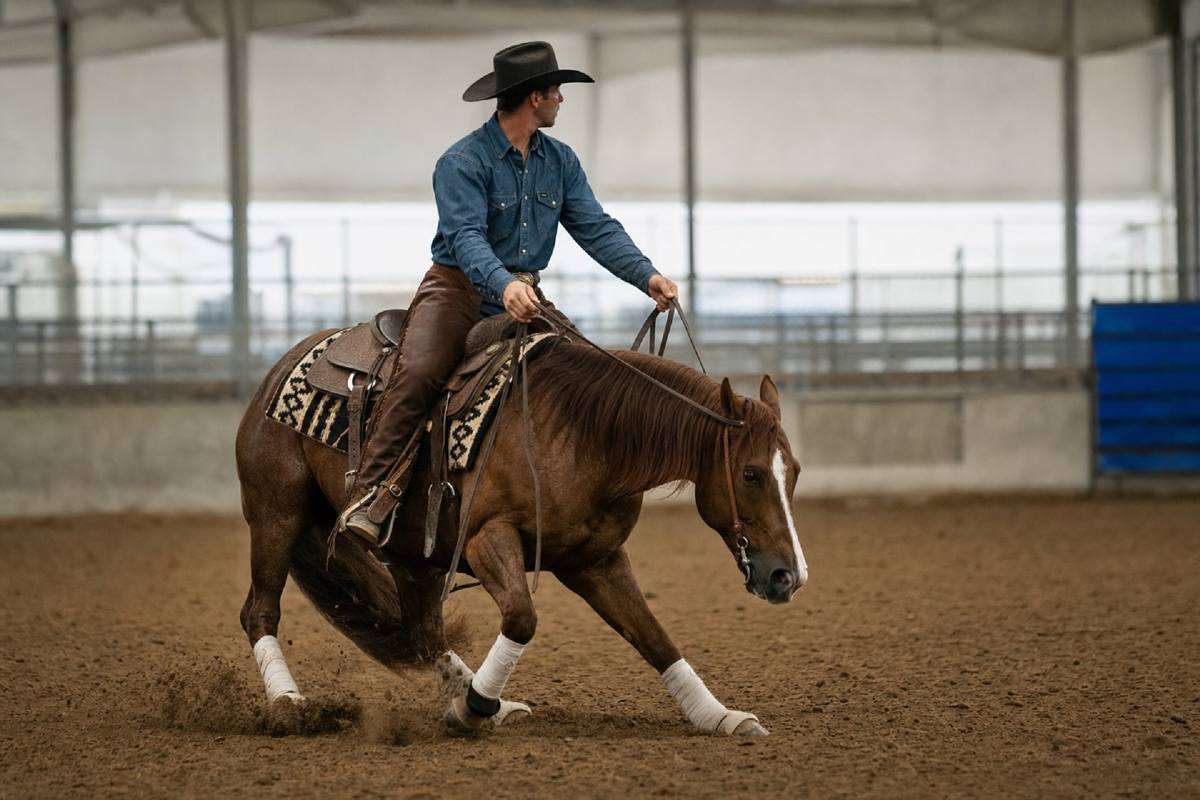
In this episode, I picked up where I’d been building with my young horse and showed how I connect the dots between forward motion, softness, circles, and eventually counter canter. If you want to watch the full walkthrough and the on-horse examples, start with the episode here: https://www.youtube.com/watch?v=Bd_Cw9wYjdU.
My goal in this lesson is simple: I want a horse that stays moving, stays soft, and learns how to carry herself in a shape without falling apart. That takes time, and I don’t pretend otherwise. I’m not looking for a quick fix. I’m developing the parts one piece at a time so the horse can eventually hold herself in a more advanced maneuver like counter canter.


What you need first
Before I ask for counter canter work, I need a horse that already understands some basics:
- a solid lope departure
- the ability to travel on a circle
- enough simple lead change understanding to stay organized between leads
- forward motion and a soft face from groundwork and early riding
- a jog that is straight, balanced, and not dependent on the reins for support
If those pieces aren’t in place, I don’t try to force the advanced shape. I go back and build the foundation.
Start with forward motion and a horse that wants to travel
Early in the lesson, I focused on the bigger picture: I want my horse to move forward without me having to drag her there. I’m thinking about the horse like an athlete. If I want her to improve, I have to keep developing the right muscles and habits instead of just drilling the same thing over and over.
That means I’m patient with the process. I let her find her pace, and I keep her honest about moving through her body instead of locking up or getting heavy. The more naturally she can travel forward, the easier everything else becomes later.
For more context on that setup work, see this segment: https://www.youtube.com/watch?v=Bd_Cw9wYjdU&t=243s.
Soften the face without losing the shoulders
One of the most important pieces I worked on was getting the horse soft in the face while keeping the shoulders organized. I do not want a horse to rely on the neck for balance. If I take the neck away and the shoulders fall apart, that tells me the horse isn’t really carrying herself yet.
So I ask for a soft bend, but I keep the body straight enough that the chest and shoulders stay up. I want to be able to bring the head slightly to the side while the rest of the horse keeps jogging or loping forward in rhythm. That’s where the balance starts to show up.
I’m careful about my hands here. I slide to the feel, I don’t snatch. I stay quiet enough that the horse can soften without getting defensive. The reward is a horse that stays square in front, keeps her chest up, and doesn’t fall through the shoulder when I ask for a change in bend.
See this section for more detail on the neck and shoulder control piece: https://www.youtube.com/watch?v=Bd_Cw9wYjdU&t=478s.
Build circles that teach the horse to stay up
Once I have some softness, I use circles to teach balance. Circles tell me a lot. They show me whether the horse wants to lean on me, tip through a shoulder, or stay up and carry herself. I like using cones as markers because they help me see whether the horse is drifting, tipping in, or losing shape.
I’m not chasing perfection. I’m looking for progress: can she stay up in her shoulder, keep her rhythm, and hold the shape I’m putting her in? When she starts to understand that, I can use my outside leg and outside rein to support the body without over-riding her.
The key is that I keep the shape consistent. I don’t want to throw the horse around from one side to the other and confuse her. I want her to learn how to organize her feet, her shoulders, and her neck so the circle stays clean.
Introduce counter canter through shape, not force
Counter canter is not something I think about as a separate trick. I think about it as the next step in shape, balance, and control. When I start asking for counter canter, I’m still using the same ideas I’ve been building all along: keep the horse soft, keep the shoulders organized, and keep the body round enough to stay balanced.
I start with a regular circle, then I gradually shift the shape so I can ask the horse to maintain the lead while traveling on a line that would normally tempt her to swap or fall apart. That’s where the real control shows up. I’m testing whether she can hold her body together when the track gets harder.
At that point, I’m not trying to overpower her. I’m trying to gather her up. I want the horse to bring her feet closer together, stay round, and keep the motion smooth enough that she doesn’t panic when the shape changes.
For the fuller counter canter progression, watch this part of the episode: https://www.youtube.com/watch?v=Bd_Cw9wYjdU&t=955s.
Use your body position to help the horse stay balanced
My own position matters a lot here. I keep my hands wide and out of the way so I’m not collapsing over the horse’s neck. I want to support the horse from the outside, not trap her.
I also use my seat and legs to keep the horse lifted in the body. When I need more shape, I can’t get tight and ride scared. If I do that, I’ll just make the horse brace. Instead, I stay out to the side, keep the conversation soft, and let my aids say, “stay with me and keep your balance.”
That’s especially important when the horse feels the pressure and wants to get funky or shut down. If that happens, I go back a step, regroup, and try again. I’d rather have a horse that tells me this is hard than one that learns to panic.
Practical takeaways
Here’s what I want you to remember from this lesson:
- Counter canter starts long before the actual maneuver.
- A horse that can’t stay soft and balanced on a circle won’t hold up in counter canter.
- Don’t rely on the neck for balance; build strength in the body.
- Keep your hands quiet and your position open.
- When the horse struggles, back up, regroup, and come back to the ask.
- Consistency matters more than rushing the result.
What to practice next
If you’re working on this at home, I’d practice in this order:
- confirm your lope departure
- ride balanced circles in both directions
- ask for softness without losing straightness in the shoulders
- introduce small changes in bend while keeping the rhythm
- gradually build the shape that will support counter canter
If you want to see the full live progression and the exact moments where I adjust the horse, watch the episode on YouTube here: https://www.youtube.com/watch?v=Bd_Cw9wYjdU.
The big lesson is that advanced work is just a collection of good basics stacked together. If I can keep a horse soft, forward, and organized, I can keep building toward more demanding maneuvers without losing the feel that makes the whole thing work.
Support this writer
If this article helped you, leave a one-time tip.


