
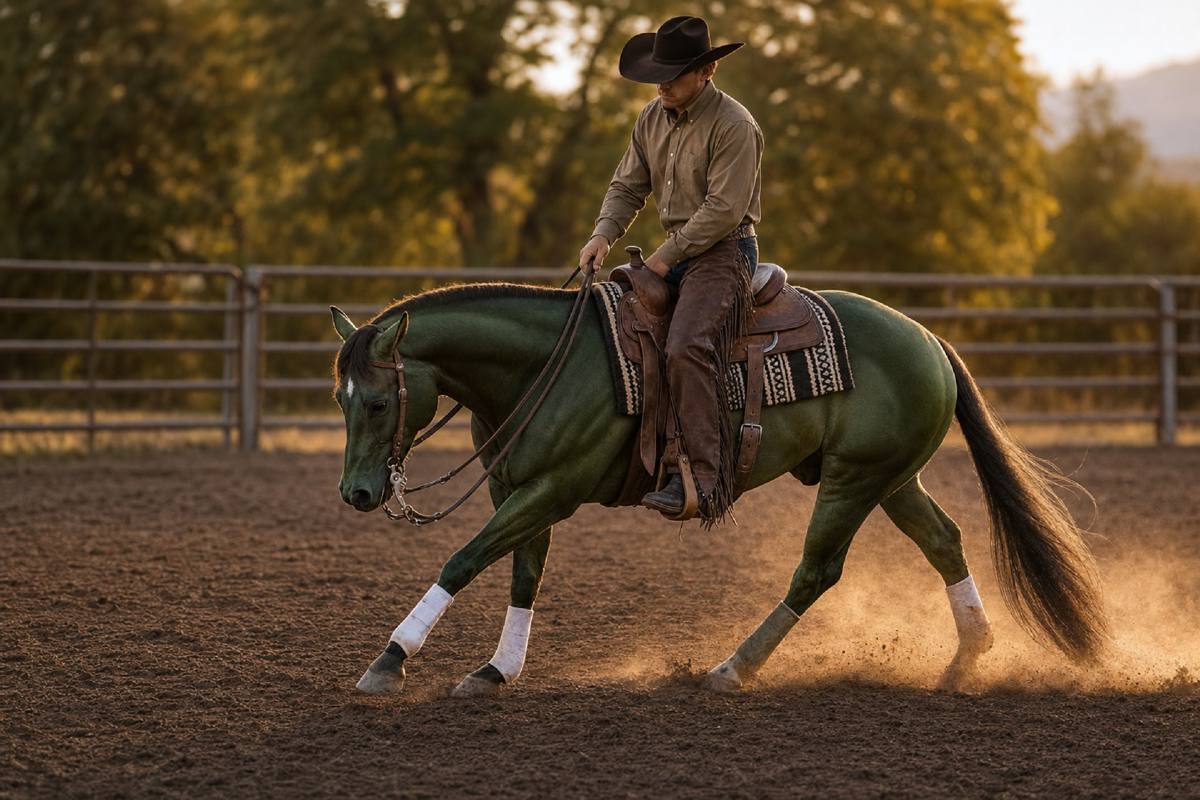
If you want a greener horse to become more rideable, I always start with shape. In this lesson, I work through the idea that circles are not just about turning—they are one of the best tools we have for teaching a horse to stay between our hands and feet, travel with better balance, and eventually go straighter with less brace. For the full walkthrough and on-horse examples, watch the episode here: https://www.youtube.com/watch?v=h7d6afQ8GaQ.


What you need first
Before I ask for this work, I want a horse that already understands the basics of forward movement and steering under saddle. For the circle and lope work in this episode, I expect a horse that can already make a lope departure. For the softness and headset work, I want the jog established first. And for the shoulder and lane control pieces, I need the first ride foundations in place so I can shape the body without overwhelming the horse.
Building the idea of lanes
My first job is to help the horse understand that her body has lanes. I think of the horse like she is traveling on a highway: the hip, the inside front and outside hind, and the outside shoulder each have a job in the circle. When I’m riding well, I can influence each of those lanes with my hands and legs without losing the shape.
That matters because I don’t just want to pull a horse around a circle. I want her to keep her hip where I put it, keep her shoulders from drifting, and stay organized through the whole turn. If I need a sharper shape, I can bring more outside hand and more body control into the equation. If I want the circle to soften, I can keep the shape but ask her to stay lighter and straighter through the body.
For the full demonstration of how I set those lanes and adjust the circle, see the segment around 3:55 here: https://www.youtube.com/watch?v=h7d6afQ8GaQ&t=235s.
Using the circle to change the lope
A lot of riders try to fix lope problems on a straight line, but I prefer to use the circle to solve them. Why? Because the circle makes the horse work harder. It asks her to organize her body, carry her shoulders, and find balance without leaning on her neck.
In this lesson, I’m asking the horse to lope with a lower neck and less dependence on that front-end brace. When I take the neck away from her comfort zone, she has to find a new way to move her feet and use her body. That can feel ugly at first, and I’m okay with that. I’m not trying to make a polished show lope on day one. I’m trying to create a horse that can carry herself without using her neck as a crutch.
I keep my hands low and wide enough to support the shape, but I don’t want to hold the horse together with my hands. I want her to feel that when she organizes herself correctly, I leave her alone. That release is the reward.
If you want to see the neck-dropping work in more detail, watch the deep link at 7:12: https://www.youtube.com/watch?v=h7d6afQ8GaQ&t=432s.
Softening the neck without losing the body
One of the biggest lessons here is that I’m not simply lowering the head. I’m teaching the horse to separate neck from body. If she wants to lift the neck and balance on it, I make that option less comfortable. Then I wait for her to search for a better answer.
I’ll take the neck down a little farther than I think I need in order to get past the horse’s comfort zone. That extra effort in training pays off later when I can ride at a more normal frame and still keep the softness. The goal is a horse that can eventually come back up into a showable position, but only after she has learned not to depend on the neck for balance.
That’s why I keep returning to the circle. The circle gives me a place to control the shape while I let the horse sort out her own feet. If she gets heavy, braces, or speeds up, I can rebalance and send her back to work. If she finds softness for a few strides, I can turn her loose and let her feel the difference.
Circle work creates the straight horse
This is the part I want riders to remember most: the circle is the harder job, and the straight line is the reward. When the horse can stay honest in the circle, I can use that work to produce a better straight line later.
That means I’m not afraid to make the circle more difficult than the horse would prefer. I may ask for more neck softness, more shoulder control, and more separation between the front end and the hind end than I’d show in a finished pattern. That’s intentional. I want to train the horse beyond the final picture so the final picture becomes easy.
When I bring that same horse straight, she should feel like the answer is to travel out and relax. That’s how I use circles to build straightness. I’m not just chasing a prettier turn; I’m teaching the horse to want to go straight because the straight line is the place where she can rest.
You can see this idea develop further in the 13:36 segment here: https://www.youtube.com/watch?v=h7d6afQ8GaQ&t=816s.
Practical takeaways from this ride
Here’s what I want you to keep in mind from this session:
- Stay organized in your own position first. If my square seat and quiet posture are off, the horse feels it immediately.
- Think in lanes. My hands and feet create the shape, and the horse learns to stay inside it.
- Use the circle to teach body control, not just to make the horse turn.
- Don’t be afraid of an imperfect look while you’re building softness.
- Reward the horse by letting her go straight when she offers the right answer.
- If the neck is the problem, don’t keep arguing with it on a straight line—use the circle to take away the brace and rebuild the mechanics.
What to practice next
If I were assigning homework from this episode, I’d keep it simple:
- Work your lope departure first so you have a horse that can leave correctly.
- Ride circles with clear lanes in your hands and legs.
- Ask for a lower, softer neck without losing forward motion.
- Release when the horse finds balance, even if it’s only for a few strides.
- Go back to the circle and repeat until the horse starts to understand that softness is the easiest answer.
That’s the bigger picture: I’m not just shaping a circle, I’m building a horse that can carry herself, stay between my aids, and become straighter and softer because of the work we do on the bend.
For the complete ride and all the on-horse detail, watch the full episode here: https://www.youtube.com/watch?v=h7d6afQ8GaQ.
Support this writer
If this article helped you, leave a one-time tip.


