
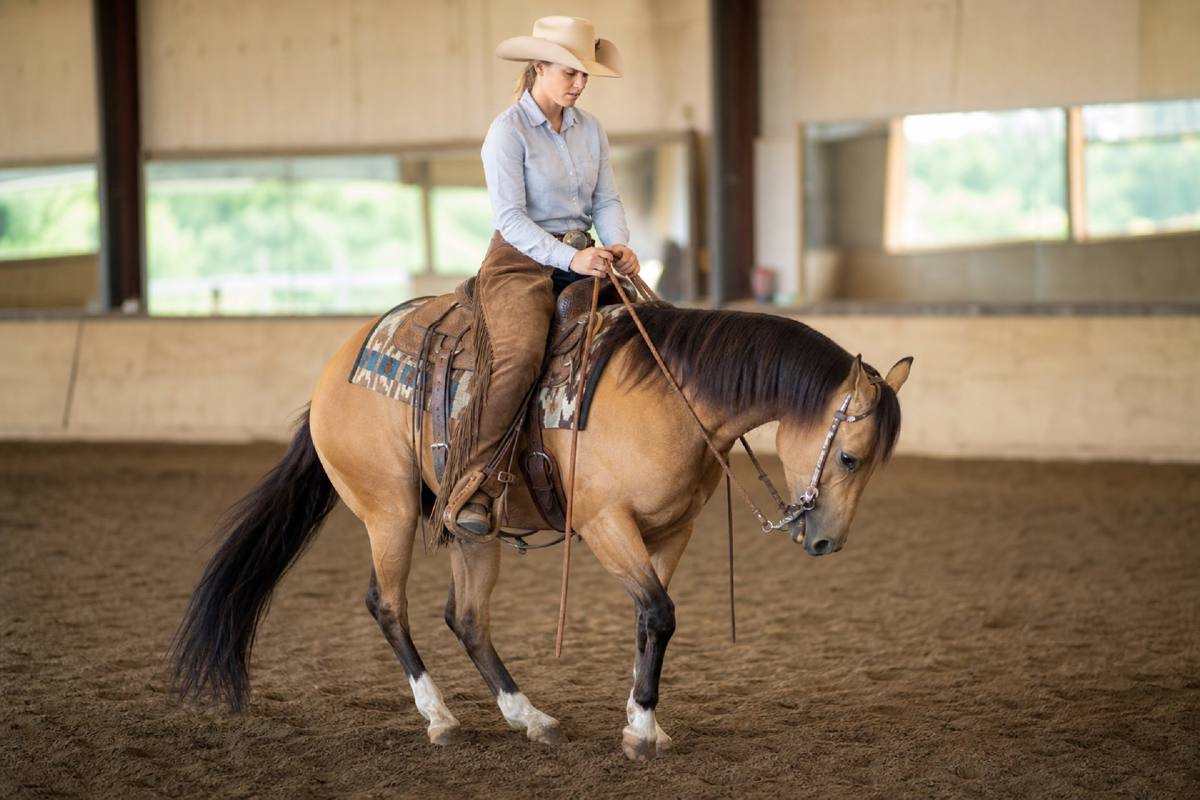
In this episode, I’m working on two foundational ideas that change the feel of a horse right away: a softer mouth and a better backup. You can watch the full lesson here for the on-horse examples and timing: https://www.youtube.com/watch?v=WGjaNj-XI5I


What you need first
Before you dig into these exercises, I want you to already have some basic under-saddle control. That means your horse should understand transitions under saddle and have an honest jog. If those pieces are still developing, use this lesson as a preview of where we’re headed rather than a place to rush ahead.
Start with a clear feel in the reins
When I work a young horse, I don’t want to get busy with my hands or pull the head around. I want to make my contact simple enough that the horse can understand it. My goal is to create a soft conversation through the reins, not a wrestling match.
One of the biggest things I focus on is making the bit move left and right in a way the horse can feel. If I get no response, I increase the motion a little, but I still keep it organized and quiet. The point is to let the horse find the answer without me overdriving the cue.
A lot of riders accidentally pull straight back when they think they’re asking for softness. I’d rather see you think in terms of shaping the contact so the horse can understand where the pressure is coming from and where the release lives.
For the full walkthrough, watch the segment here: https://www.youtube.com/watch?v=WGjaNj-XI5I&t=7s
Use three clear buttons in your hands
I like to think of my hands as having three buttons for the horse’s mouth: widen, lift, and back up. That gives me a much cleaner way to communicate than just pulling harder and hoping for the best.
When I widen my hands, I’m inviting the horse to soften across the front of the body and accept the bit without curling behind it. When I lift, I’m asking the horse to elevate the front end and let the poll and jaw come up instead of dropping onto the forehand. And when I ask to back up, I want it to come from light, honest rein pressure paired with a release the moment I feel the right response.
The biggest idea here is that every cue should have a clear answer. If I ask and the horse finds even one step or one moment of softness, I release and reward that effort. That’s how I teach the horse to get lighter.
Why the backup starts with the shoulders
When I first ask a horse to back up, I’m not looking for a big, dramatic step. I’m looking for the shoulders to unlock. The moment I feel that break in the front end, I release.
That release is everything.
I’m not trying to trap the horse in the pressure. I’m teaching the horse that one step in the right direction earns comfort. If I can get one step every time I ask, I’m building a horse that understands the lesson and stays mentally with me.
A good backup should feel simple, not like a fight. I want the shoulders safe and the hind legs coming forward underneath the body. That gives me a horse that’s beginning to organize itself correctly instead of one that just braces against the reins.
See this segment for the backup work in more detail: https://www.youtube.com/watch?v=WGjaNj-XI5I&t=539s
Build softness from the front to the back
Headset is not just about where the nose is. I’m looking at the whole picture: the neck, the shoulders, the topline, and how the horse carries itself through the body.
If the horse stays braced in the front, the back end can’t really come up and do its job. But when the horse softens, the whole body starts to reorganize. The neck can drop in the right way, the back can lift, and the horse can begin to travel in a more balanced frame.
That’s why I care so much about teaching a horse to respond to the reins without getting tight. If I can create softness in the mouth, I can influence the rest of the body in a way that makes the horse easier to ride.
For the full demonstration on rein contact and headset, watch here: https://www.youtube.com/watch?v=WGjaNj-XI5I&t=259s
Practical takeaways
Here’s what I want you to remember from this lesson:
- Keep your rein aids simple and readable.
- Don’t pull harder when the horse doesn’t understand; organize the cue instead.
- Reward the smallest correct response with an immediate release.
- Think of backup as a shoulder-and-body lesson, not just a foot movement.
- Use softness in the mouth to improve the horse’s overall balance and frame.
What to practice next
If you’re going to school on this lesson, I’d start with short, thoughtful sessions at the jog. Ask for a little softness, then release. Ask for one honest step back, then reward it. Keep the feel light enough that your horse can search for the answer instead of bracing into the reins.
As you improve those basics, you’ll start to feel how the horse’s face, shoulders, and body work together. That’s when the ride gets simpler.
If you want to see the full lesson and the on-horse examples, go back to the main video here: https://www.youtube.com/watch?v=WGjaNj-XI5I
Support this writer
If this article helped you, leave a one-time tip.


