
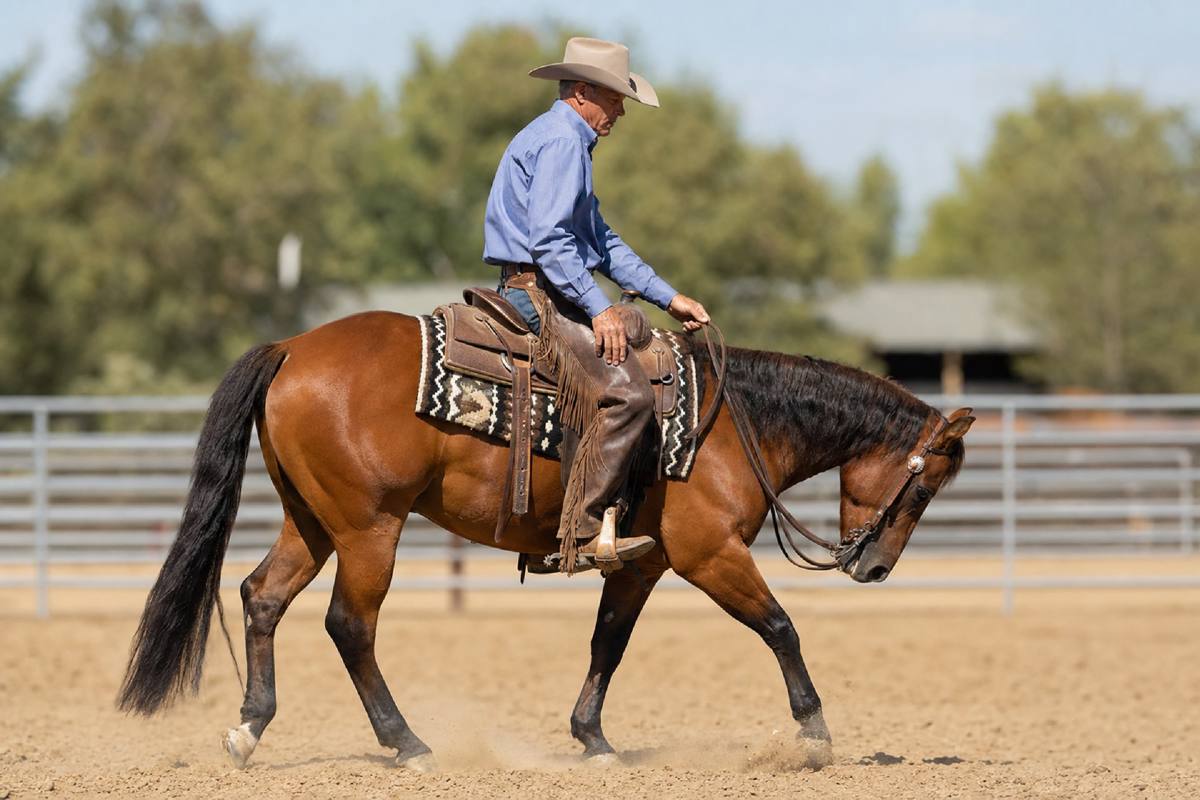
I use transitions to shape the whole ride
Watch the full episode here if you want to see the on-horse examples and timing in real time. In this lesson, I’m working through why transitions matter so much in colt starting and finished-horse schooling: they tell me whether my horse is staying between my hands and feet, whether he’s balanced through his shoulders and hips, and whether he can think through changes instead of reacting to them.
My goal is not to make a horse rush into a new gait. I want the transition itself to look correct. When I get that part right, the horse gets softer, straighter, and more useful in every other part of the ride.


What you need first
Before you work on these under-saddle transitions, I want you to already have:
- a solid first ride foundation
- forward motion that is calm and willing
- basic steering and body control
- a horse that can walk forward without constant driving
If those pieces are not there yet, I use transition work as a way to build them — not as a place to force speed.
Start with rhythm, not the kick
The first thing I watch is my walk rhythm. I want the horse walking smoothly, and I want my own timing to stay steady. I’m using the rhythm of the walk to organize the transition, not just adding leg and hoping for the best.
If I have to kick to get a transition, I usually lose the kind of softness I’m after. Instead, I keep my hands quiet enough to guide the head and neck, and I use my body timing to ask for the change. That helps the horse stay in the bridle and stay with me instead of popping out of position.
A lot of riders miss this: the quality of the transition starts before the gait change happens.
Keep the horse between your hands and feet
I’m always looking for the horse to stay between my hands and my feet. If the shoulders drift, if the hip leaks out, or if the neck twists, I treat that as information about the body underneath.
That’s why I pay attention to what the head and neck are telling me. If the front end changes shape, I know I need to fix the body behind it. I may need to straighten the shoulders, reset the neck, or re-establish the horse’s balance before I ask again.
This is especially important when I’m preparing for the jog or the lope. The horse has to accept the position first. If he leans on my hands or crowds my leg, I don’t just push through it — I reset and make the shape better.
Make jog transitions soft and round
When I ask for a jog, I want it to happen with control and without drama. I’m thinking about where the horse’s body is before I ask, then I close my feet and let the transition happen in a way that stays smooth.
If the horse rushes or gets flat, I go back and fix the setup. I want him to step into the jog with his body organized, his neck down, and his rhythm intact. A good jog transition should look like the horse is waiting on me, not dragging me along.
For the full walkthrough, watch the segment around the first under-saddle transition work: see this section at 00:09.
Think through the lope instead of exploding into it
When I move on to the lope, I’m even more careful. I do not want the horse to launch, brace, or rush through the setup. I want him to think his way into the transition.
That means I may walk him up, set his shoulders, and position my legs before I ever ask for the lope. If he starts to fall apart, lean, or rush his feet, I back up and rebuild the shape. Sometimes I’ll even use a quieter step, an indirect turn, or a brief reset to keep him balanced enough to be correct.
The key idea is this: no transition should start with a scramble. I want the horse to stay soft in his body and attentive in his mind.
Use the setup to reveal the problem
One of the biggest lessons in this ride is that the transition tells me what needs help.
- If the horse leans, I look at my body position and his balance.
- If the neck comes up, I know the front end is getting tight.
- If the shoulders drift, I know I need to straighten and support them.
- If the hip swings out, I need to bring the hind end back underneath.
I’m not just chasing the gait. I’m reading the horse’s posture and using the transition to improve it.
That’s why I’ll often slow down and make a smaller change before I ask for the bigger one. A correct small transition is worth more than a messy big one.
Practice the transition off your feet
By the end of this lesson, I want my horse to be able to move up into a transition off my feet instead of waiting for me to kick or get busy with my hands.
That kind of horse is easier to show, easier to ride one-handed later, and much more dependable when the pressure goes up. If I can keep him soft, square, and responsive while I’m riding on a loose rein, then I know I’m building something useful.
That’s the real value of transition work: it teaches a horse to stay organized when the task changes.
Practical takeaways
Here’s what I want you to remember from this lesson:
- Start with a steady rhythm at the walk.
- Don’t chase the transition with your legs.
- Keep the horse between your hands and feet.
- Fix the shape before you ask for more speed.
- Treat a messy transition as information, not failure.
- Think through the lope setup instead of rushing into it.
- Use every transition to improve balance, softness, and body control.
What to practice next
Start with simple walk-to-jog transitions on a straight line. Focus on staying soft in your hands and consistent in your feet. When that feels better, add more control over the setup: keep the neck down, keep the shoulders straight, and ask for the gait change only when the horse is waiting on you.
After that, practice lope transitions only when the jog work stays calm and organized. For more detail on how I set this up in the saddle, rewatch the full video here: The Importance of Your Transitions.
Support this writer
If this article helped you, leave a one-time tip.


