
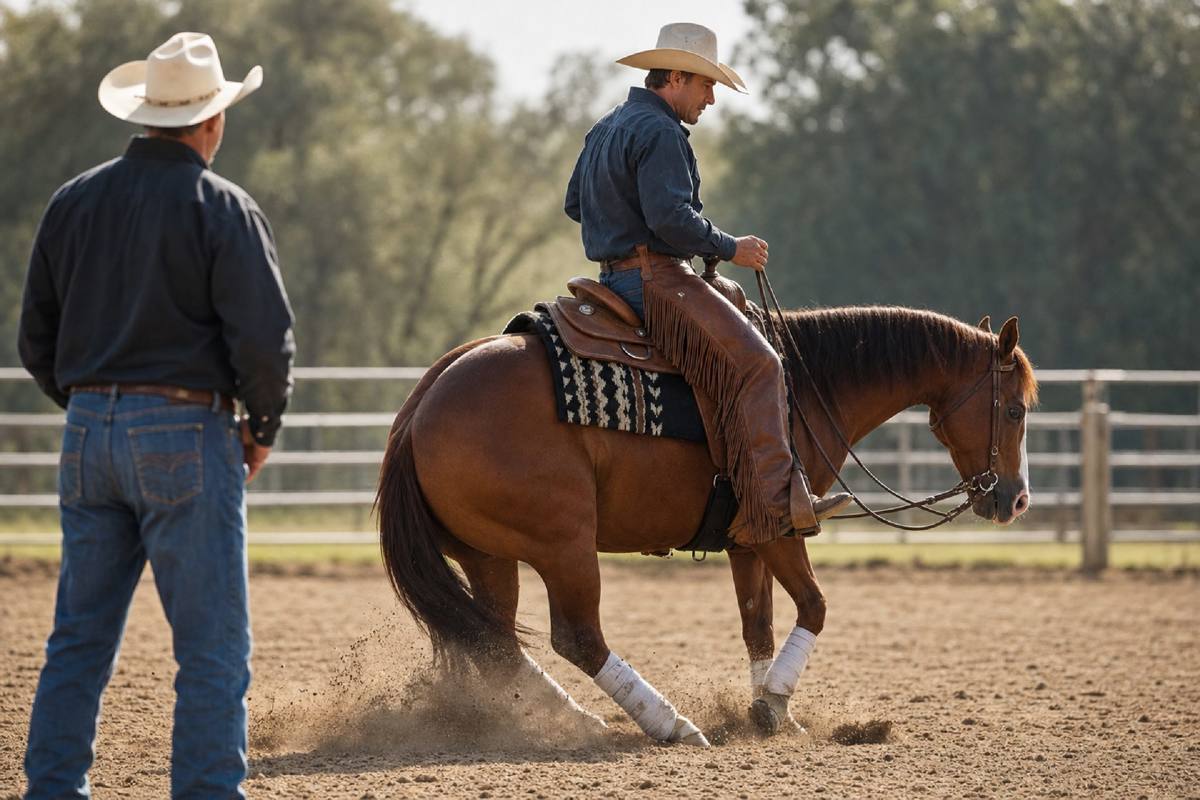
If you want a better backup, start by making the horse think about his feet, his shoulders, and his balance instead of just pulling harder. In this lesson, I show you how I build a light, correct backup from the ground up, using simple pressure-and-release timing, straightness, and a horse that stays soft in the bridle.
For the full walkthrough and on-horse examples, watch the main episode here: https://www.youtube.com/watch?v=qY1zt46nH5s


What you need first
Before I ask a horse to back with quality, I want decent response to transitions under saddle. The horse should already understand forward, stop, and soften to rein pressure. If that foundation is missing, I keep the work simple and make sure I can control the horse’s shoulders and feet before I expect a polished backup.
Build the backup from the face to the feet
The first thing I focus on is softness. I do not want a horse bracing against my hand, tossing his head, or planting his feet and fighting me. When I close the rein pressure, I want him to give at the face, bring his shoulders back, and step away from the pressure.
That’s why I break the movement into small pieces. I am not looking for a big dramatic effort. I want the horse to move his feet one step at a time, then soften, then come back with a little more ease on the next try. The reward is in the release. If he finds the correct answer, I get lighter.
For more detail on this first stage, see the opening segment here: https://www.youtube.com/watch?v=qY1zt46nH5s&t=9s
Why I care so much about straightness
A lot of horses do not back straight because one shoulder is locked more than the other. When that happens, I can see the horse drift off one way and step unevenly behind. Rather than punish the crookedness, I use it as information.
If the horse backs crooked, I know which side is not releasing. So I can change the feel, turn the horse slightly, and ask that sticky side to come loose. The goal is to get both shoulders and both hips moving in the same rhythm instead of letting the horse hide a problem behind speed or force.
That is one of the biggest lessons in this video: crookedness usually tells me where the horse is stuck.
Let the horse think his way out of pressure
I do not want to get into a tug-of-war. If the horse does not understand, I stay patient and let him search for the right answer. A horse learns faster when he can think through pressure instead of just reacting to it.
That means I may keep the same feel long enough for the horse to figure out what I mean. The instant he softens, I release. That moment of release teaches him more than all the extra strength in the world ever could.
I also use the horse’s little breakthroughs. When he hesitates, then finally gives and backs more softly, that tells me he is understanding the shape of the cue. Those are the moments I want early in training.
Use the stop to improve the backup
Once the horse starts to understand the backup, I carry that lesson into the stop and lope work. If he stops and immediately shifts his weight onto his front end, I know I need more balance. I want him to be ready to step back as soon as I ask, which means he has to finish his stop with his weight back and his body organized.
That is why I back again after the lope and after the stop. The backup becomes a test of balance. If the horse can stop and then back lightly, I know he is staying engaged behind instead of falling onto his shoulders.
See this segment for more detail on backing after the lope and stop: https://www.youtube.com/watch?v=qY1zt46nH5s&t=757s
Why the backup helps the whole horse
A good backup is not just about moving backward. It helps me build a horse that is lighter in the front end, stronger behind, and more thoughtful in every transition. When the horse learns to step back without resistance, I often see a better lope, a cleaner stop, and less drama in the rest of the ride.
I also use the backup as a way to keep the horse mentally active. I would rather make the brain work than run the body into fatigue. When the horse is thinking, he stays more trainable, more balanced, and less likely to get stiff or sloppy.
Preparing for better steering and body control
This lesson also sets up later body control work. Once I have a horse that can step back softly and stay organized, I can start asking for more precise turns and shoulder placement. That is the same kind of response I want when I begin to correct steering with body control and outside rein or strap pressure later on.
For the groundwork progression and outside strap correction that builds on these ideas, watch this later segment: https://www.youtube.com/watch?v=qY1zt46nH5s&t=1061s
Practical takeaways
- Ask for a backup with feel, not force.
- Reward every honest try with an immediate release.
- Watch for crookedness; it tells you which shoulder or side is stuck.
- Use the stop to confirm balance and readiness to step back.
- Keep the horse thinking so he learns softness instead of bracing.
- Improve the backup a little at a time rather than demanding a perfect result all at once.
What to practice next
If you’re working on this at home, start with a few quiet requests for backup from the saddle. Focus on straightness, softness in the face, and stepping back one correct step at a time. Then pair that work with your stops and transitions so the horse learns that every forward movement should still leave him available to back up lightly.
Once that feels dependable, I would move on to more precise shoulder control and steering corrections, because the same balance and responsiveness will carry into those exercises.
Support this writer
If this article helped you, leave a one-time tip.


