
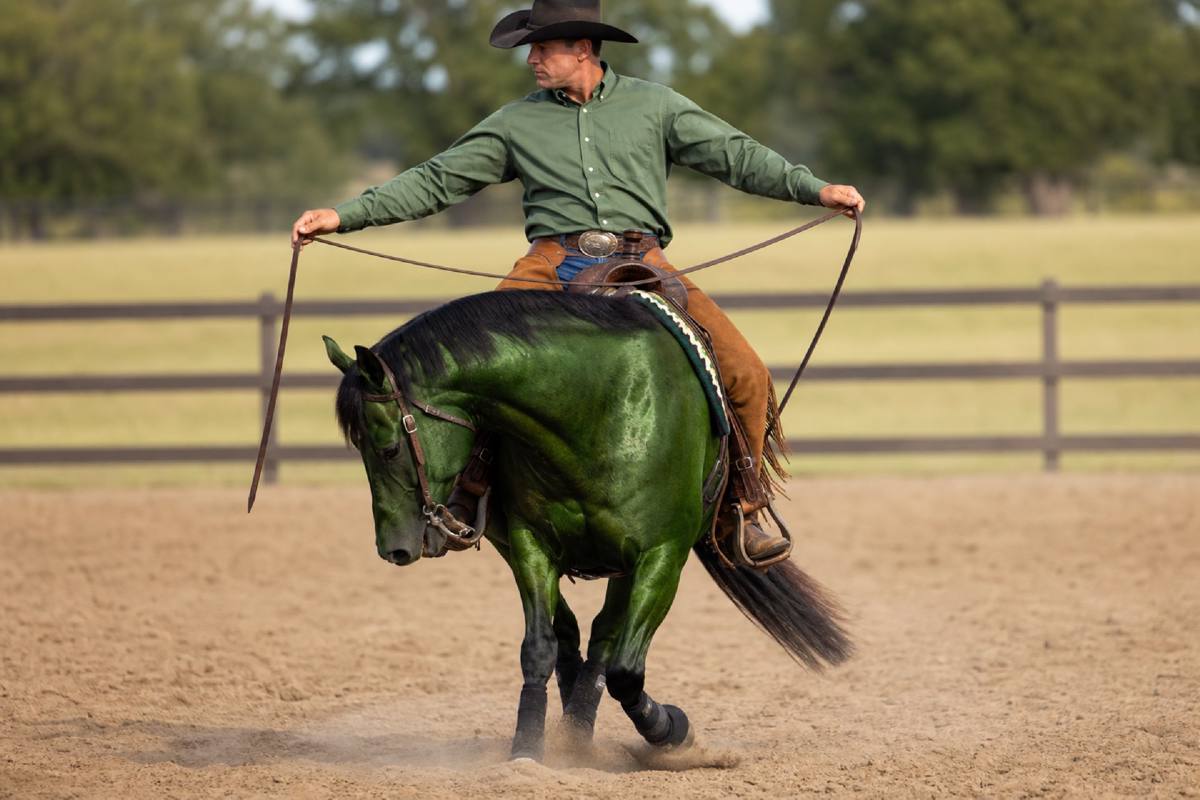
In this lesson, I’m building one of the most useful pieces of horsemanship I teach: the indirect turn. If you want a horse that stays organized through transitions, softens in the body, and eventually turns with more lift and less brace, this is where I like to start. For the full walkthrough and on-horse demonstrations, watch the episode here: https://www.youtube.com/watch?v=rUqAJCf6TbM
What I’m after here is not a fancy maneuver right away. I want a horse that understands how to yield his shoulder, stay with my leg, and carry himself without leaning on my hand. When those pieces are in place, the indirect turn becomes a very natural next step.


What you need first
Before I start asking for this kind of work, I want a horse that already understands the basics of riding forward, stopping, steering, and giving to leg pressure. In this episode, I’m building directly off shoulder control, so if your horse still struggles to move away from your foot without rushing or bracing, slow down and reinforce that first.
I also want the horse to be able to keep his neck soft enough that I’m not fighting him in the bridle. If he’s hollow, pushing through the hand, or losing balance every time I ask for a change, I need to stay simpler until those fundamentals improve.
Start with shoulder control and a soft response to your leg
The first piece I’m looking for is a horse that moves his body away from my leg without me having to get aggressive. I don’t want to haul on him or trap him. I want to lay my calf or spur on, create a clear question, and get a response that tells me he understands how to move his shoulders and ribcage.
That’s the beginning of all of this. If my horse can step out and away from pressure, then I can begin shaping the body instead of just steering the head. I’m not trying to make him perfect in one rep. I’m trying to make him willing, honest, and responsive.
Watch this segment for the shoulder-control foundation
Build the indirect turn from a side-pass feel
One of the ideas I come back to in this lesson is that the indirect turn starts as a more basic sideways response. I like to think of it as side-pass work first, then turning it into something more advanced.
When I ask for the turn, I’m not just pulling the horse around with my hands. I want the body to come up, over, and across. That means the shoulders need to stay light, the ribs need to soften, and the hind end has to learn not to surge forward through the move.
At first, I’m perfectly fine with a bigger, looser shape. I’d rather see the horse step, search, and figure it out than see him jam himself up or panic. If he walks forward, leans on me, or gets a little wide in the process, that tells me where the holes are. Then I can come back and refine it.
Keep the neck soft and the body round
A big part of this lesson is understanding that I cannot create a good turn by locking the horse up. If I hold his neck too high or brace him in the front end, he can’t organize his body correctly. I need enough room in my reins and my hands for him to drop his neck and find balance.
That’s why I keep asking for softness instead of forcing shape. If the horse stays hollow, he’s not really lifting through the body. If he drops his neck and stays with me, now I can start to build the roundness I want.
I also don’t want him walking off when the pressure comes off. In the early stages, I’m testing whether he’ll stay with me and stay organized instead of drifting forward the moment things get easy. That patience matters.
Use the leg to teach the horse to sit, not run through the aid
The biggest correction I’m making in this episode is against forward push. When I put my foot on, I want the horse to sit back and organize himself, not just drift through the maneuver and lean into it.
That’s where the indirect turn becomes more than a steering exercise. I’m teaching the horse to keep his weight underneath himself, stay off the hand, and lift through the shoulders instead of falling onto the forehand. The more he understands that, the more compact and correct the turn becomes.
This is also why I don’t rush to the lope or try to solve everything in a faster gait. If the walk work isn’t clean, moving up only hides the problem. I’d rather stay at the speed where I can improve the response and build the right mechanics.
See this segment for the turn progression and body control work
Why I like a bigger start before I ask for a tighter turn
I’m comfortable with a horse being a little big and unfinished in the beginning. That’s not failure to me; that’s information. Early on, I expect some push, some extra step, and some learning as the horse figures out how to shift his weight and keep his shoulder up.
As he improves, I can make the area smaller and the turn cleaner. More advanced horses should stay tighter and more contained. But I don’t demand that immediately, because I want the horse to understand the feeling first.
That progression matters in reining, trail, and any other discipline where I want better control of the body. Once the horse understands how to stay under himself, I can use that same concept to improve spins, transitions, and other maneuvers.
Practical takeaways
- Start with shoulder control before you ask for a polished indirect turn.
- Keep your hands wide enough for the horse to drop his neck and stay soft.
- Use your leg to ask for lift and organization, not just sideways motion.
- Don’t rush to faster gaits if the walk version is still messy.
- Expect the horse to be a little big at first, then refine the shape over time.
- Reward honest effort, even when the horse is still learning how to balance.
What to practice next
If I were taking this lesson home, I’d keep working on three things:
- Shoulder control at the walk with a soft, clear leg aid.
- Side-pass style yield that teaches the horse to move away from pressure without bracing.
- Indirect-turn entries where I can ask for the shoulders to come up and around without losing softness in the neck.
Once those pieces improve, I can begin tightening the shape and making the turn more efficient. That’s the real value of this exercise: it gives me a way to build control without taking the life out of the horse.
For the best visual reference, I recommend watching the full episode and comparing the early attempts to the more organized reps. That on-horse detail will help you feel how the horse changes when I get the timing and body position right.
Support this writer
If this article helped you, leave a one-time tip.


