
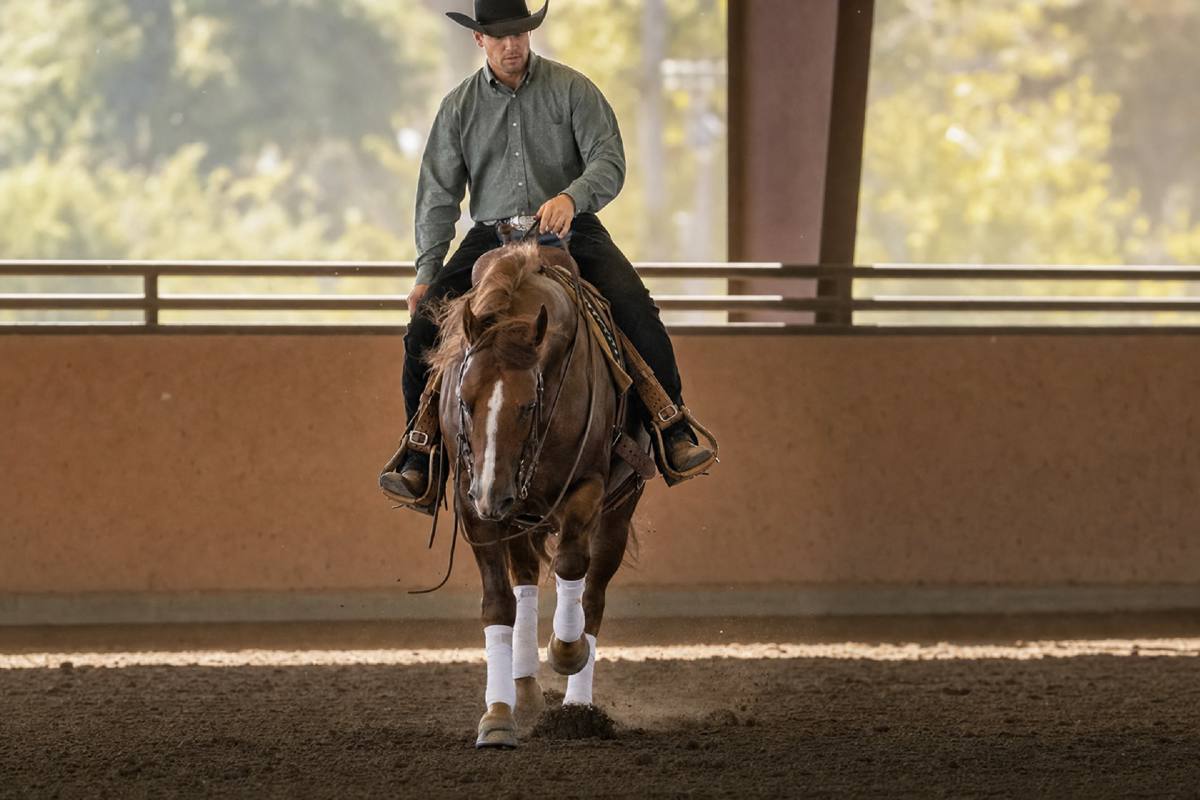


Intro
In this lesson, I’m breaking down flying lead changes in the simplest way I know how: a lead change is really a weight transfer. If I can help my horse load the correct side, stay straight through his body, and keep moving forward in rhythm, the change becomes much easier to understand and much cleaner to ride.
For the full walkthrough and on-horse examples, watch the episode here: Intro to Flying Lead Changes. I also reference a few key moments below with deep links so you can jump straight to the exact setup I’m talking about.
What you need first
Before I ask for a flying lead change, I want a horse that already understands:
- Circles so he can balance on both leads
- Simple lead changes so he has a basic understanding of changing through a reset or transition
- Counter canter so he can stay organized when the lead and direction don’t match perfectly
- A clean lope departure so he can strike off correctly and keep the rhythm I need
If those pieces aren’t solid yet, I’d rather build them first. The flying change is not where I want to teach balance from scratch.
The real idea behind a flying lead change
The biggest thing I want riders to understand is that the change starts before the change. I’m not just asking the horse to swap leads out of nowhere. I’m helping him move his weight to the right place so he can change without getting shocked, rushed, or thrown out of rhythm.
That means I’m looking for three things at the same time:
- Weight transfer
- Straightness through the body
- Forward motion that stays fluid
If I have too much sideways and not enough forward, the change can feel sticky or incomplete. If I have too much forward and not enough lateral control, the horse may just run through the cue instead of actually changing.
The sweet spot is that controlled, balanced feel where the horse moves over, stays connected, and then switches cleanly.
For more on the basic theory, see this segment: Lead Change Theory and Setup.
Load one side, then let the change happen
When I set up a flying change, I want the horse to load one side of his body first. From there, I release or open the opposite side enough to let the new lead come through.
That’s the pattern I keep coming back to:
- load the left side, then open the right side
- load the right side, then open the left side
I’m not looking for a giant dramatic move. In fact, the bigger the rider’s motion gets, the more likely we are to surprise the horse and make the change feel ugly. I want the cue to stay small, soft, and organized so the horse can stay with me.
Why straightness matters so much
Straightness is a huge piece of this. If the horse’s front end changes before his body is ready, or if his hind end swaps before his shoulders are set, the change can fall apart. I want the whole body to move over together.
That’s why I keep emphasizing body line. If I can push the horse across while keeping him straight from nose to tail, he can drive through the change instead of falling apart around it.
Why I keep my leg close
One of the biggest mistakes I see is letting the supporting leg drift too far away from the horse. When that happens, I lose my ability to influence the body at the exact moment I need it.
I want that leg to stay close, quiet, and ready. It helps me:
- keep the horse square in my body
- prevent my own upper body from rolling
- stay connected enough to support the lateral push
- make the transition from one lead to the other feel like one fluid event
If I start leaning or letting my parts and pieces get away from me, I’m usually telling the horse to fall apart too.
The setup I want to feel under saddle
As I ride through the setup, I want the horse to push across and load the target side without losing his frame. The outside legs are doing a lot of the balancing work at the lope, so I’m using that balance to my advantage rather than fighting it.
Here’s the feel I’m after:
- the horse stays in motion
- the horse moves sideways just enough to organize the body
- the horse stays straight through the middle
- I ask for the switch without having to make a huge correction
When the setup is right, the change feels almost inevitable. I’m not forcing it; I’m preparing it.
If you want to see the exact body position and leg placement I’m talking about, jump to this section: Body position and leg placement for a clean flying lead change.
Simple lead changes as a stepping stone
I also want riders to remember that the simple change is part of the foundation here. If my horse understands how to reorganize himself through a transition and come back together without falling apart, the flying change becomes a much smaller ask.
In practical terms, I’m teaching the horse to:
- accept a shift in balance
- stay soft through the body
- keep moving forward instead of bracing
- understand that a cue can mean reorganization, not panic
That’s why I don’t rush this process. I’d rather have a horse that understands the feel of weight transfer than one that gets quick but confused.
Practical takeaways
If I had to simplify this lesson into a few rider takeaways, they’d be these:
- Think of the flying lead change as a weight transfer, not just a trick.
- Keep your horse straight through the body so the change can travel cleanly.
- Use small, quiet cues instead of big, surprising moves.
- Keep your supporting leg close so you can influence the body without losing balance.
- Make sure the horse can push across and stay forward before you expect the change.
What to practice next
Before you ask for more flying changes, I’d work on these pieces:
- clean circles at the lope
- consistent simple lead changes
- counter canter work for balance
- lateral control without losing forward rhythm
- riding your horse straight while shifting his weight side to side
Once those pieces feel dependable, the flying lead change stops feeling like a leap and starts feeling like the next logical step.
For the full demonstration and timing on the horse, watch the complete episode here: Intro to Flying Lead Changes.
Support this writer
If this article helped you, leave a one-time tip.


