
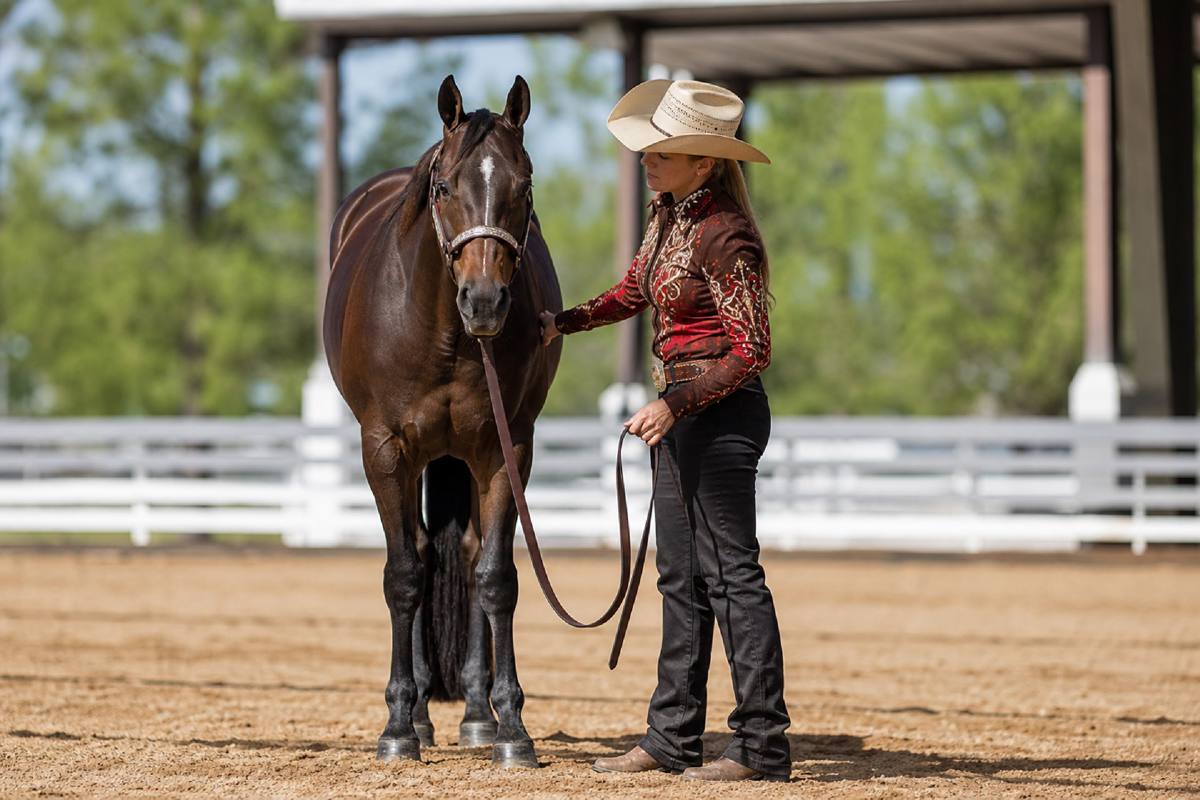
Showmanship pivot fundamentals: fixing the wrong-foot turn
In this episode, I work through a common showmanship problem: a horse that wants to pivot on the wrong foot and hide behind the handler instead of staying straight, forward, and attentive. You can watch the full lesson here: Showmanship: The Pivot. For the full walkthrough and on-horse examples, see the deep link at 7 seconds.
The big idea is simple: I want the horse to understand the fundamentals of showmanship before I worry about polishing the finished look. That means forward energy, correct body position, a soft but meaningful response to the chain, and a horse that stays with me instead of leaning back or getting crooked.


What you need first
Before I ask for a better pivot, I need a horse that already understands:
- basic steering and shoulder control
- how to move forward with the handler
- how to stay out of the handler’s space without bracing
- how to stop and stand quietly before the turn
If those pieces are missing, the pivot usually falls apart. I’m not trying to skip ahead to a polished maneuver. I’m building the horse’s understanding so the turn can come from balance and rhythm, not from pressure and confusion.
Start with forward, not backward
One of the most common mistakes I see in showmanship is using the chain to pull a horse back so much that the horse starts working from behind the motion instead of through it. When that happens, the neck tightens, the body sucks back, and the horse gets sticky in every part of the pattern.
That’s not what I want.
I want chain pressure to mean, “come with me.” I want the horse to stay on the gas pedal and keep thinking forward through the whole class. If the horse learns to hide by coming back every time pressure shows up, it becomes much harder to get true expression in the trot, the pivot, and the rest of the showmanship pattern.
Keep the horse straight through the pivot
A correct pivot starts with position. I want the horse where I can influence the shoulders without allowing the body to swing out or fall in. If I step off to begin the turn, I expect the horse to stay with me and keep the body lined up.
If the horse lags behind, drifts, or curls the neck, I don’t have a true pivot yet. I have a horse trying to escape the work. So I focus on the basics:
- stay straight
- stay up in front of me
- move the feet without letting the body collapse
- keep the nose and shoulder where I need them
If the horse wants to plant a hind foot, I don’t treat that as the hard part. The real challenge is whether the horse can stay organized through the turn and continue to match my movement.
Don’t let the horse fall back into a default pattern
A lot of horses develop a habit of backing off the pressure every time they feel the chain or a correction coming. In this lesson, I’m not trying to take the horse’s personality away — I still want relaxation and softness — but I do need the horse to stay mentally connected and physically available.
That means I’m looking for:
- less hiding behind the handler
- less dropping back out of the frame
- less scrambling through the turn
- more willingness to stay right there and do the job
When I step, I want the horse to step with me. If I’m already moving and the horse is still planted, we’re out of rhythm. A good showmanship horse learns that the handler’s motion matters and that the pivot has a rhythm of its own.
Use petting as reinforcement
I use a lot of petting in my showmanship work, and I mean a lot. The horse needs to know when it got the answer right. A scratch or a soft pat helps the horse settle and understand that it just did something worth keeping.
That matters especially with a young or busy horse. If I only correct and never reward, I can make the horse dull, worried, or resistant. I want the opposite: a horse that relaxes when it understands the task and stays mentally in the game.
Keep the lessons short and clear
I do not want to drill showmanship until the horse gets sour. I’d rather make one useful impression, get a lick and chew, and quit while the horse is still thinking.
That approach helps me in two ways:
- It keeps the horse from getting burned out.
- It makes the lesson easier to remember the next day.
Showmanship is supposed to look neat and controlled, but the practice doesn’t have to be long or complicated. I’d rather teach the horse one clean piece at a time than chase a polished pattern before the fundamentals are there.
Practical takeaways
Here are the biggest points I want you to remember from this lesson:
- A correct pivot starts before the turn ever begins.
- Forward is more important than hiding backward.
- The horse should stay straight and with you, not curl away.
- Petting and release help the horse understand what earned the reward.
- Short, focused sessions work better than long, frustrating ones.
If your horse wants to pivot on the wrong foot, I’d look first at whether the horse truly understands forward motion, shoulder control, and how to stay connected to you without bracing.
What to practice next
If you’re ready to improve your showmanship pivot, go back and work on the basics first:
- leading with purpose and rhythm
- shoulder control on the ground or under saddle, depending on your program
- stepping off cleanly with the horse staying straight
- rewarding the horse for staying with you instead of backing out of the task
Then return to the pivot and ask for just a little more. For more detail on how I set this up and adjust the horse in real time, watch the full video here: Showmanship: The Pivot.
Support this writer
If this article helped you, leave a one-time tip.


