
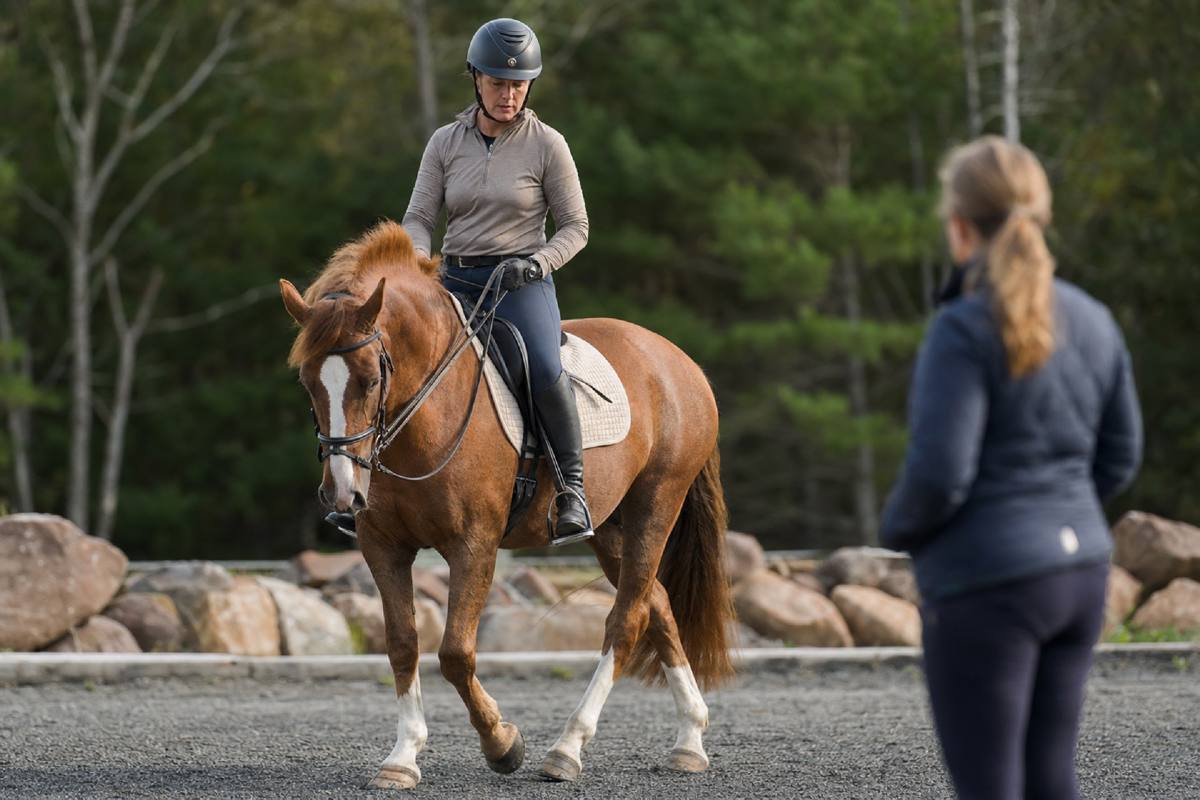
If you want a young horse to stay willing, balanced, and easier to steer, I need to start with the basics: rhythm, flexion, and control of the shoulders and ribs. In this ride, I’m working through those foundations on a starting horse and showing how I use my legs and hands to help the horse travel straighter without getting braced or trapped.
For the full walkthrough and on-horse timing, watch the episode here: https://www.youtube.com/watch?v=nnuOwB_aIjo


What you need first
This lesson builds on the first ride. Before I ask for this kind of shoulder control, I want the horse to understand forward motion, basic steering, and the idea of yielding to light pressure. If that first layer isn’t there yet, I keep the work simple and focus on getting a calm, willing response.
Establishing rhythm before I ask for shape
I always want to feel a steady rhythm first. If the horse starts losing that one-to-one feeling in the feet, I know he’s telling me he’s uncomfortable or unbalanced. When that happens, I don’t keep pushing for more shape or more bend. I stay with the rhythm until things settle back down.
That matters because shoulder control only works when the horse can keep marching in a consistent tempo. If the feet start getting scattered, my job is to hold the line, keep my position, and help the horse organize himself again instead of letting the ride fall apart.
See this segment for more detail on how I maintain the rhythm while the horse sorts himself out: https://www.youtube.com/watch?v=nnuOwB_aIjo&t=312s
Using my legs to straighten the shoulders and ribs
Once I have that rhythm, I start controlling where the shoulders and ribs are traveling. My goal is not to drag the horse around with my hands. I want to use my inside leg, outside leg, and seat to help the body stay aligned under me.
If the shoulders drift, I’ll bring my leg in to help the horse step back into line. If the ribs swing out, I’ll stay consistent with my position and keep asking the horse to move through my legs instead of escaping the contact. I’m thinking about the whole body, not just the neck.
That’s an important point for riders starting colts: if I only bend the tip of the nose, I haven’t really changed the horse’s body. I want the base of the neck, the shoulders, and the ribcage to come with me so the horse can actually travel straighter.
Keeping my horse between my feet
A big part of this lesson is teaching the horse to stay between my legs and move with me instead of leaning away or falling through one side. When the horse gets crooked, I don’t chase him harder. I square him back up, hold my line, and keep the conversation simple.
That’s where patience matters. A young horse may try different ways to avoid the pressure, and I have to be ready to stay consistent from stride to stride. I’m not looking for perfection right away. I’m looking for the horse to understand that the answer is to stay in the middle and soften to the aid.
Practical takeaways
Here are the main things I want riders to take from this ride:
- Start with rhythm before asking for more shoulder control.
- Use your legs to organize the horse’s body, not just to drive forward.
- Think about straightness through the shoulders and ribs, not only the head and neck.
- Stay patient when the horse gets crooked or rushes; hold your line and help him settle.
- Reward small moments of balance and softness so the horse learns where comfort lives.
What to practice next
If you’re working a young horse, I’d practice short rides that focus on three things: a steady walk, light yielding to the leg, and keeping the shoulders from drifting. Don’t rush to advanced maneuvers. Build the horse’s understanding of straightness and rhythm first.
Once that feels dependable, we can start using those same ideas to prepare for more advanced steering, body control, and eventually more collected work.
For more context and the full in-saddle examples, watch the complete episode here: https://www.youtube.com/watch?v=nnuOwB_aIjo
Support this writer
If this article helped you, leave a one-time tip.


