


Intro
In Colt Starting 202, trainer Jeremy LaRose lays out a practical, repeatable blueprint for a horse’s first rides. The theme of the episode is simple: make the first experience under saddle feel ordinary, not dramatic. That means doing the homework on the ground, mounting only when the horse is relaxed, and keeping a skilled ground person in the loop to protect forward motion and timing.
Rather than rushing into big requests, LaRose focuses on safety, clarity, and consistency. The result is a first-ride process that helps the horse stay mentally steady while the rider stays in a safe position.
Source video: Colt Starting 202
What you need first
Before you use this lesson, the horse should already have the basics in place:
- Desensitization for tack, movement, and handling on both sides
- Lunging with a saddle so the horse understands pressure, release, and body cues from the ground
- Lunging foundation with reliable forward motion and basic transitions
- Mounting readiness: the horse should stand still, accept the rider’s movement, and not brace against being touched from either side
This episode assumes the horse already knows how to go forward on cue and can stay calm while a rider prepares to get on.
Lesson 1: Make mounting boring and safe
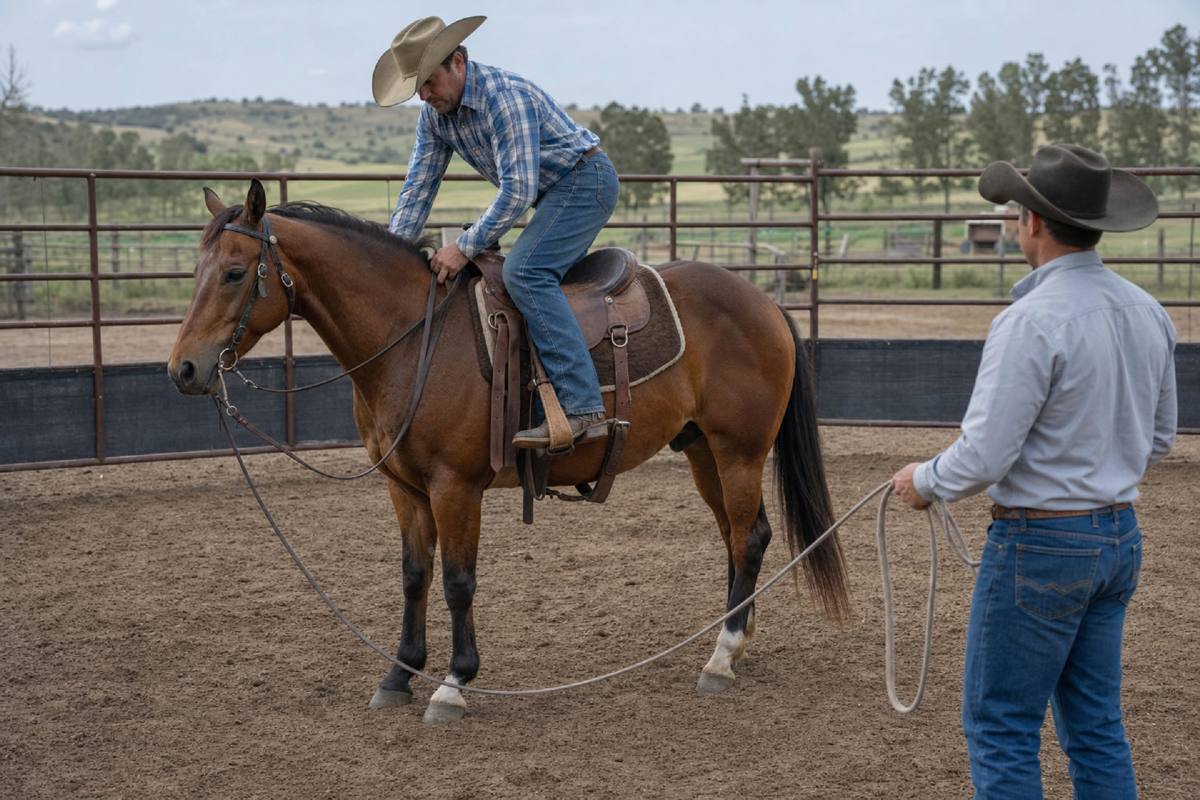
LaRose treats mounting as one of the riskiest moments in colt starting, so his approach is all about reducing surprises. Before he puts a foot in the stirrup, he checks that the horse can stay still while he moves around, reaches over, and simulates the motion of getting on and off.
A few key ideas stand out:
- The horse should remain planted while the rider adjusts position
- If the horse starts to move, pressure continues until the feet stop, then the reward comes immediately
- The rider should be able to step up and down without triggering tension
- Both the left and right sides matter; there should be no “good side” and “bad side”
LaRose’s point is that if the horse cannot stand quietly for the mounting routine, it is not yet ready for the rider’s full weight. In his system, calm feet are the safety check.
Source clip: Mounting safety and standstill on both sides
Lesson 2: Keep the first ride quiet and familiar
Once he is in the saddle, LaRose’s first goal is not performance — it is not changing the horse’s world too much. He wants the horse to feel like the only difference is that there is now a person sitting on top.
That means:
- Stay quiet in the saddle
- Avoid big movements or noisy corrections
- Keep your hands and body out of the horse’s face as much as possible
- Let the ground person keep the horse moving forward
He also emphasizes that the ground person has a serious job: they are there to keep the horse from shutting down or drifting off when the rider is still new. The horse already understands forward motion from the lunge work, so the first ride builds on that same language instead of inventing a new one.
LaRose’s philosophy is to keep the first ride simple enough that the horse can succeed quickly. If the horse walks, trots, and stays mentally settled, that is a win.
Source clip: First ride routine with a ground person maintaining forward motion
Lesson 3: Let the rider stay balanced while the horse learns to carry on
In the middle of the first-ride process, LaRose shows how important rider position is when the horse starts to move. He wants the rider to stay organized, close to the saddle, and ready to follow the horse without pulling the horse’s head down or getting thrown off balance.
The horse should learn:
- Forward means forward
- The rider does not need to hang on the horse’s mouth to make progress
- The rider can stay secure without becoming a source of panic
This is where the groundwork pays off. If the horse already understands the cue to move and has practiced transitions on the lunge, the rider is not asking for something unfamiliar. The lesson is not just about movement — it is about preserving confidence as the horse begins to carry a rider.
Source clip: Quiet first ride and controlled transitions
Lesson 4: Introduce lope transitions without losing the horse’s mind
When LaRose begins the first lope work, he wants the transition to stay controlled and brief. He does not want the ground person to over-handle the horse or accidentally pull him back into a scramble. Instead, the horse should receive enough support to keep going forward, while the rider stays light and prepared.
His approach to the first lope looks like this:
- Ask for the lope only after the horse has already shown calm walk-trot work
- Keep the horse on a predictable path, preferably in a controlled environment like a round pen
- Maintain contact and timing from the ground so the horse does not drift or cut in
- Keep the rider’s hands from becoming restrictive during the transition
- Break the lope down before the horse becomes confused or bored
A major takeaway here is that LaRose does not wait for a bad moment to fix it. If the horse starts to lose rhythm, he calmly comes back down to trot on his own terms. That keeps the transition from becoming a battle and helps the horse associate changes in gait with clear, low-drama cues.
Source clip: Maintaining contact and control during the first lope transitions
Practical takeaways
Jeremy LaRose’s system is built around preventing mistakes instead of chasing them after they happen. The biggest lessons from this episode are:
- A first ride should feel like a natural extension of the horse’s groundwork
- Safe mounting starts with still feet and calm reactions on both sides
- A ground person is not optional during the earliest rides; timing matters
- Quiet hands and a quiet seat help the horse stay relaxed
- Early transitions should be short, clear, and easy to understand
- Confidence is more important than speed when you are starting a colt
What to practice next
If you are building toward a first ride, the next steps should reinforce the same ideas from the ground:
- Practice standing quietly for mounting from both sides
- Strengthen lunge-line response to walk, trot, and lope cues
- Review leading and handling so the horse respects personal space
- Repeat brief saddle sessions that end before the horse gets tense
- Keep transitions simple and reward relaxation quickly
With those pieces in place, the first ride becomes less of a test and more of a confirmation that the horse already understands the job.
Support this writer
If this article helped you, leave a one-time tip.


