


Intro
In this episode of Colt Starting 201, trainer Jeremy LaRose walks through the practical steps he uses to keep a young horse calm, balanced, and progressing after the first saddle is introduced. The big theme throughout the lesson is simple: don’t hide balance problems with tighter tack—fix the horse’s way of carrying himself first.
Jeremy explains that a colt that leans into the circle, drops a shoulder, or drifts off balance is setting himself up to roll the saddle and make the first rides harder than they need to be. Instead of rushing, he uses groundwork, saddle exposure, and desensitization tools to help the horse stay mentally steady while his body learns a better posture.
Watch the source episode: Colt Starting 201 on YouTube
What you need first
This lesson sits on top of a few foundational steps:
- Lunging foundation — the horse should already understand the circle, forward motion, and basic transitions.
- First saddling — the colt needs to accept the pad and saddle without panic.
- Because this episode includes groundwork progressions, the more advanced concepts here are best understood as preparation for riding, not finished under-saddle work.
Introducing the saddle without creating fear
Jeremy starts by making the first saddle experiences feel ordinary. He is careful not to overreact if the colt fidgets, but he also doesn’t ignore signs that the horse is off balance or worried.
His goal is to keep the horse from learning that movement, pressure, or new equipment should trigger panic. That means staying calm, adding pressure gradually, and rewarding stillness when the horse gives it.
A key point in this section is that the first saddle-up should not become a wrestling match. Jeremy wants the colt to stand quietly while the pad and saddle are introduced, then move on only once the horse is showing that he can handle the change.
Source: Getting the colt used to the pad, strap, and first saddle up without moving his feet
Lungeing with the saddle to reveal balance issues
Once the saddle is on, Jeremy keeps the horse working on the lunge so he can see what changes when the colt has more equipment on his back.
Rather than focusing on speed, he wants:
- steady forward motion,
- clean transitions,
- and enough balance that the saddle does not slide to the outside.
He points out that saddle roll is often a symptom, not the root problem. If the colt leans in on the circle, drops a shoulder, or travels on an uneven frame, the saddle will follow that imbalance. Tightening the cinch may hide the issue, but it will not solve it.
This is where the groundwork becomes more educational than physical. Jeremy uses the motion to help the horse learn that the saddle is part of ordinary work, while also gathering information about which side is weaker, which shoulder drops, and how much control he really has over the rib cage and front end.
Source: Lungeing with saddle to develop independent shoulders and prevent saddle roll
Using desensitization tools to prepare for riding
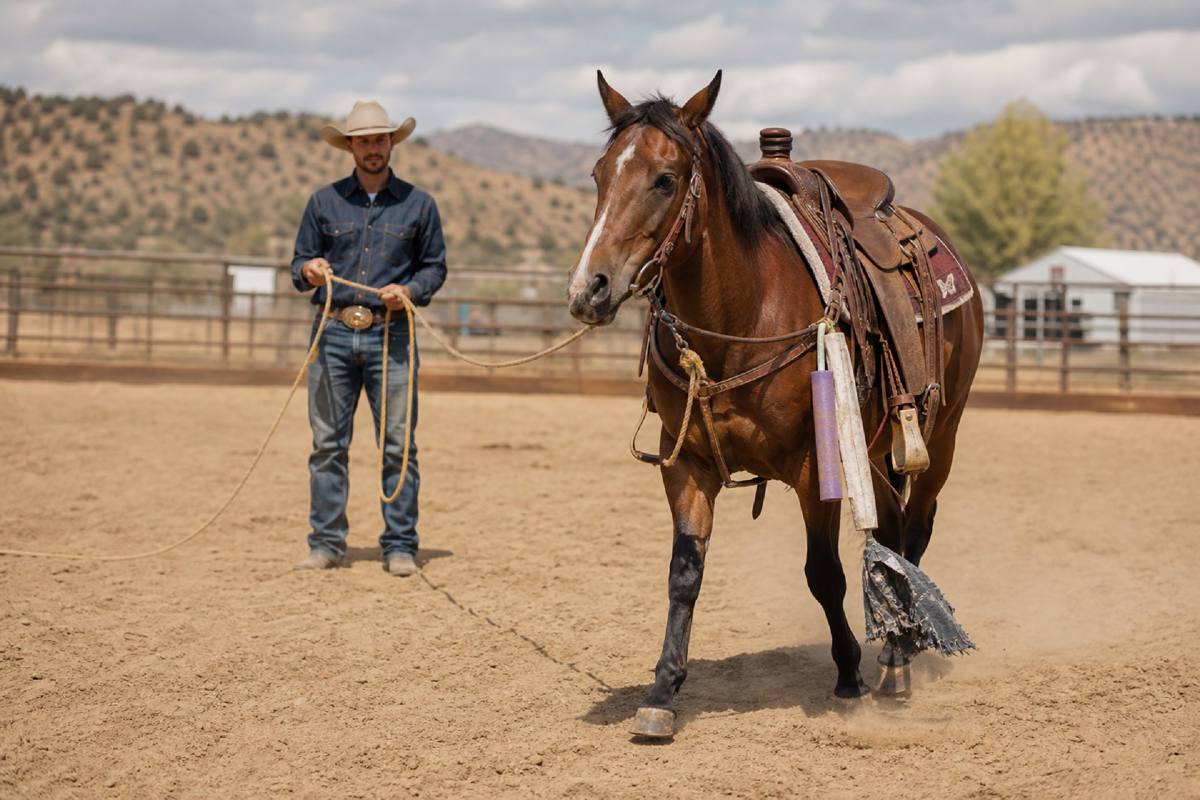
Jeremy then introduces what he calls “training wheels” — soft hanging desensitization tools that attach under the horse and move like a rider’s legs might.
The point of these tools is not to overwhelm the colt. Instead, they let him get used to:
- motion against his sides,
- objects bumping and flopping near his belly,
- and the feeling of new equipment while he stays in a working mindset.
Jeremy treats this as a normal part of the horse’s education, not a punishment. He expects some mild reaction at first, but he keeps going until the horse settles and accepts the sensation. In this episode, that process is part of preparing the colt for the next stage, where a bridle will be added and the horse will be asked to handle even more information at once.
Source: Desensitization with training wheels on the lunge
Adding the bridle and outside support
In the closing part of the lesson, Jeremy previews the next progression: adding the bridle and using an outside strap to help the horse stay balanced and find softer flexion.
For this older horse, he uses the outside strap as extra support to encourage the shoulders to stay up and the body to organize better on the circle. The idea is not to force a frame, but to make the horse easier to shape by giving him clearer boundaries.
This is a helpful reminder that every piece of equipment should support the horse’s balance and understanding. Jeremy’s method keeps the conversation simple: first accept the gear, then stay straight enough to carry it, and only then move on to more refinement.
Source: Putting on the bridle and using an outside strap for balance and flexion
Practical takeaways
- Don’t use tighter tack to cover up a horse that is leaning or unbalanced.
- Introduce the saddle calmly and gradually so the horse learns to stand, not panic.
- Use the lunge to spot weak shoulders, dropped ribs, and saddle roll early.
- Keep the horse moving forward through transitions instead of obsessing over speed.
- Desensitization tools can make the first ride feel much less dramatic if they are introduced thoughtfully.
- The earlier you teach balance and softness, the easier the under-saddle work becomes later.
What to practice next
If you’re working through a young horse like Jeremy LaRose does here, the best next steps are:
- Revisit your lunging foundation until the horse can stay forward and organized.
- Practice quiet first saddling until the pad, strap, and saddle are no big deal.
- Lunge in the saddle long enough to notice whether one shoulder or hip consistently falls out.
- Add desensitization tools only after the horse is mentally ready to learn from them.
- Prepare for the bridle and future flexion work by keeping the horse calm, straight, and responsive on the circle.
As Jeremy shows in this episode, a good colt-starting program is less about making a horse tolerate chaos and more about teaching him that new things can be handled with balance and confidence.
Support this writer
If this article helped you, leave a one-time tip.


