


Introduction
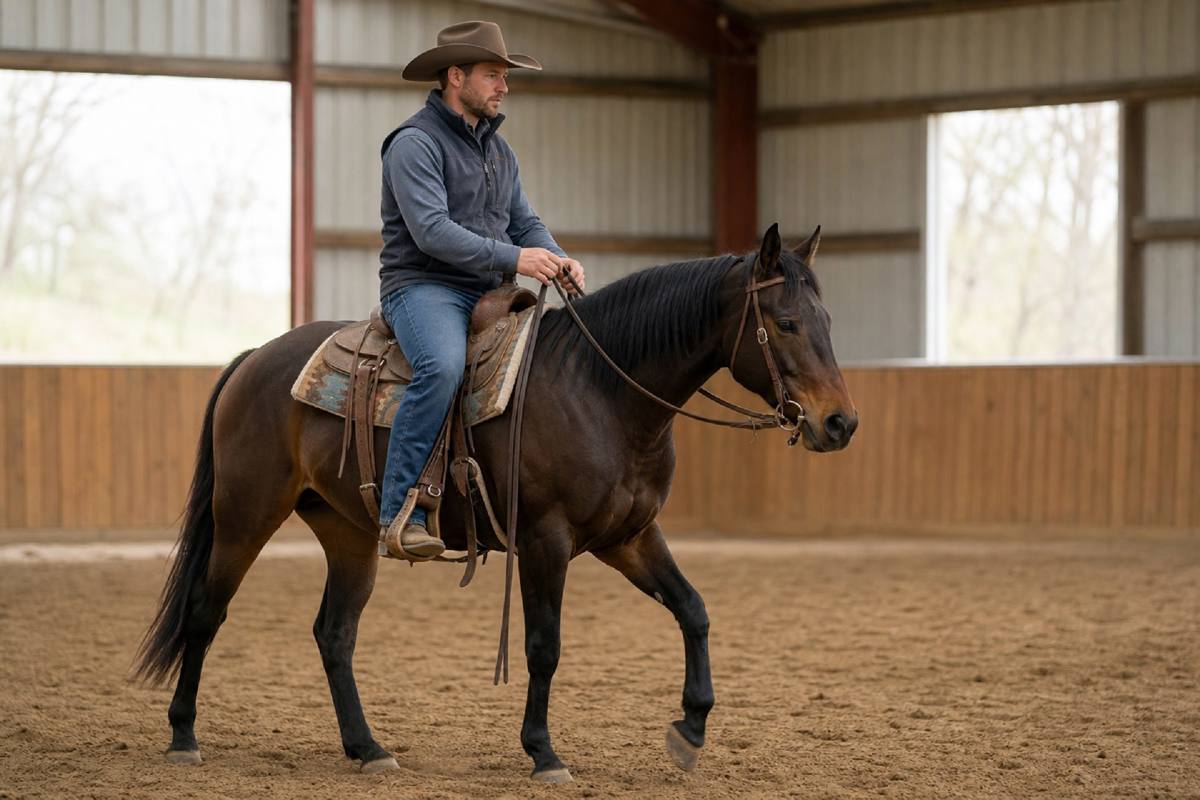
In this episode of Colt Starting 104, trainer Jeremy LaRose walks through a calm, practical first ride on a young colt and uses that ride to introduce the next big idea: clean under-saddle transitions without creating tension. The emphasis is not on getting a fancy frame. It’s on helping the horse stay quiet, stay honest in the bridle, and learn that forward motion, stopping, and steering can all happen without drama.
Jeremy’s approach is simple: keep the horse relaxed, reward the right answers, and avoid creating bad habits early. That makes this a useful lesson for anyone starting colts or reviewing the fundamentals of first rides.
Watch the full episode on YouTube
What you need first
Before this lesson makes sense, the horse should already be comfortable with:
- Mounting and standing quietly
- Basic ground handling and preparation
- Forward motion on the lunge or in-hand work
- A horse that can accept light pressure without panic
This episode is labeled as an intermediate colt-starting lesson, but the ideas depend on the horse already understanding how to move forward and how to stay manageable through basic handling.
The first ride: keep it simple, safe, and calm
Jeremy begins by treating the first ride as a short, controlled introduction rather than a test. The horse is asked to walk off quietly, stay mentally soft, and accept the rider’s presence without rushing into a bigger gait.
A few things stand out in the way he handles the first ride:
- He wants the colt to walk off without exploding into trot
- He rewards calm responses with patting and reassurance
- He keeps the horse from hiding from the hand by using a steady, honest contact
- He prefers the horse to travel with his head up enough to stay safe and balanced
Jeremy also stresses that the horse should not be allowed to drop his nose and coil himself into a position that could lead to a buck. In this stage, he is not chasing perfect head carriage. He is building a safe, workable feeling in the bridle.
That first-ride philosophy is the foundation for everything that follows.
Transition work under saddle: build up and down without a fight
Once the horse is settled, Jeremy starts asking for simple transitions under saddle. The goal is not speed or precision yet; it is to teach the colt that moving between gaits can be relaxed and predictable.
Trot departures and the start of forward motion
Jeremy likes the trot transition to happen with minimal fuss. If the horse comes up a little hotter than expected, he doesn’t react with force. Instead, he keeps the horse organized, keeps the neck from getting tight, and uses quiet reinforcement to help the colt settle into the work.
He also watches the horse’s emotional state closely. If the colt feels jumpy, he eases the pace and returns to a calmer rhythm. The message is: transitions should not become a fight.
First lopes: brief, soft, and controlled
When he introduces the lope, Jeremy keeps the first effort short. He wants a small, successful transition, then a return to relaxation. That keeps the horse from getting mentally overloaded and helps prevent the lope from becoming a big emotional event.
A key point here is that Jeremy does not want to pull the horse down through the transition. Instead, he focuses on using his body, seat, and hand position to help the horse understand the change of gear.
He also avoids kicking. In his view, unnecessary leg pressure can make a young horse defensive, while quieter aids help preserve confidence and forward thinking.
Down transitions: don’t pull, organize
Jeremy is especially clear that down transitions should not be made by hauling on the reins. He frames them as a shift from a more active gear to a quieter one, created by softening the horse’s energy rather than arm-wrestling him into slowing down.
To help with that, he uses:
- A more supportive seat
- Quiet hands that come forward and back as needed
- Small body adjustments instead of hard pulling
- Brief corrections only when the horse gets busy in the face
The result is a horse that learns to come back down without getting anxious or braced.
Shoulder control and steering: protect the outside shoulder
A major theme in this episode is keeping the colt’s shoulders organized. Jeremy explains that if the shoulders fall apart early, steering becomes much harder later. So even on a first ride, he wants the horse to stay lifted through the front end and balanced in the body.
That means:
- The horse should not collapse onto the inside rein
- The rider should be able to keep the outside shoulder available
- The colt should stay responsive enough to follow the rider’s hand
Jeremy’s goal is not a finished headset. It is enough control to keep the horse straight enough, safe enough, and steerable enough to continue building the foundation.
A good first ride ends quietly
One of the strongest takeaways from the episode is how much Jeremy values the finish. For him, a good ride doesn’t just begin well; it ends with the horse relaxed, soft-eyed, and easier to be around than when the ride started.
He wants to see:
- A lowered neck
- Relaxed eyes
- A horse that can stand and settle after the work
- Quiet acceptance when the rider dismounts and handles him from the ground
If the colt finishes tense, Jeremy sees that as a signal that something was missed. A successful first ride should make the horse more settled, not more worried.
Practical takeaways
- Start the first ride with the goal of calm acceptance, not performance.
- Keep the horse from rushing into faster gaits before he is ready.
- Use reassurance and repetition to help the colt stay mentally soft.
- Avoid pulling straight back in transitions; organize the horse instead.
- Keep the shoulders up and in front of you so steering stays available.
- End the ride only when the horse is visibly relaxed.
What to practice next
If you’re working on this stage of colt starting, focus on these progressions:
- Quiet mounting and standing still
- Calm walk-offs with no rushing
- Relaxed trot transitions under saddle
- Very short, low-pressure lope departures
- Soft down transitions without pulling
- Basic shoulder control and straightness in both directions
- Ending every ride with more relaxation than you started with
For more context, revisit the source lesson here:
- First Ride on Colt During Colt Starting Session
- Under-saddle trot and first lope transition prep with relaxation and head control
- Down and up transition work at the lope
- Easy first ride with relaxed finish and shoulder control
Jeremy LaRose’s biggest reminder here is that good colt starting is built on quiet, repeatable wins. If the horse learns to relax, stay upright, and travel honestly in the hand, the rest of the training process gets much easier.
Support this writer
If this article helped you, leave a one-time tip.


