


Intro
In this lesson recap, trainer Jeremy LaRose shows how a colt starting problem on the ground can reveal a bigger steering issue under saddle. The horse is willing to bend his neck, but his shoulders are not following, which creates crooked circles, a drifting hip, and a horse that feels hard to steer. Jeremy uses an outside strap during groundwork to help the horse learn that the shoulders, not just the nose, must stay connected to the line of travel.
This is less about forcing a turn and more about building a horse that stays straight through the body, stays attentive to pressure, and learns to carry himself in balance.
What you need first
Before trying this exercise, Jeremy’s approach assumes a few basics are already in place:
- The horse should be safe to handle on the ground and able to lunge in regular equipment.
- You should already have some foundation in shoulder control while riding so the idea of moving the shoulders, not just the head, makes sense.
- This setup is especially relevant once the horse has been introduced to tack and is ready for more advanced lunging work.
- Because the horse is starting to learn pressure on the outside of the face and neck, the handler must be able to keep the session calm and forward.
1. Why steering problems usually start with the shoulders
Jeremy opens by pointing out a common mistake: many horses learn to give at the neck before they truly understand how to follow a rein with their whole body. If the head turns but the shoulders drift another way, steering falls apart.
His goal is not to create a horse that only “looks” left or right. He wants the horse to travel with the head, neck, shoulders, and body organized together so the turn happens as one coordinated movement.
Source video: Colt Starting 203 | Jump to segment
2. Introducing the outside strap on the lunge
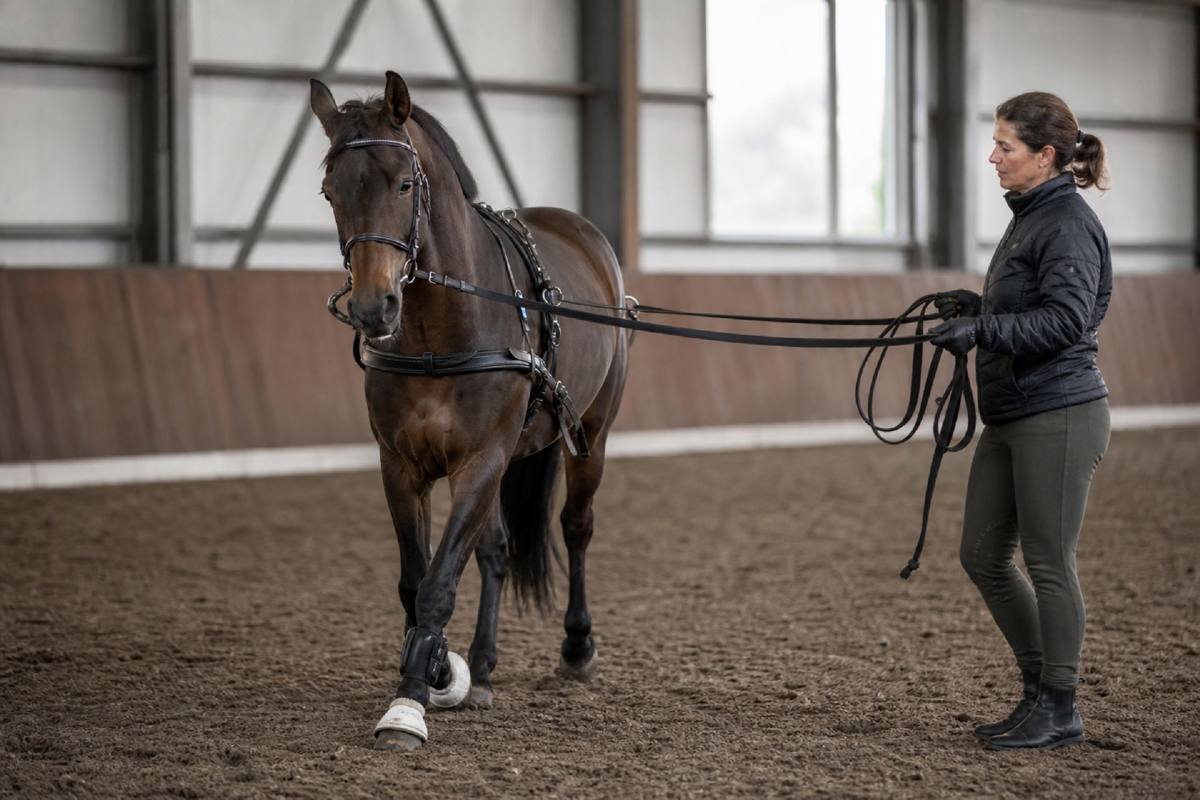
To address that crookedness, Jeremy clips a rubber strap on the outside of the horse and uses it as an outside influence while lunging. The idea is to create a feeling that encourages the horse to stay aligned on the circle rather than falling apart through the shoulder or overbending at the neck.
At first, this can feel confusing to the horse. Jeremy emphasizes that the horse has to be allowed to discover the answer without getting rushed or scared. If the horse steps forward and softens into the pressure, the pressure comes off. That release is what teaches him to keep moving through the exercise.
Jeremy is careful not to make the situation explosive. The horse is already unsure, so the handler’s job is to keep the work quiet, forward, and controlled.
Source video: Colt Starting 203 | Jump to segment
3. Straightening the body to restore balance
Once the horse understands the pressure, Jeremy uses the exercise to rebalance the whole body. The problem he is trying to fix is not just a crooked head carriage; it is a horse that has learned to lean through the circle, let the inside shoulder drop, and let the hindquarters drift out.
By bringing the head and neck back into better alignment and asking the horse to travel more honestly through the body, Jeremy helps him stand up through the inside shoulder and keep the hip from swinging out. That matters because a horse that leans or rolls the ribcage can become hard to steer and can even shift the saddle out of place.
In practical terms, this is a way to reset balance before the horse ever gets too far along in his training.
Source video: Colt Starting 203 | Jump to segment
4. Teaching the horse to stay accountable to the outside rein
Jeremy also explains that the outside rein or outside strap can help keep the horse from overusing the inside bend. If the horse gets too soft to the inside, the outside shoulder may leak out and the hip may drift away from the circle. That is when lunging starts to look like the horse is running in a bowl rather than staying on a clean, level arc.
By using the outside rein to support the outside of the body, Jeremy helps the horse keep the circle shape, stay flatter, and carry more evenly through the turn. He ties this directly to better leadership: the horse has to figure out the right answer, and the trainer rewards that answer.
This is also why the work belongs in a starting program. A horse with older habits or extra confidence may need this kind of boundary-setting before he can become dependable under saddle.
Source video: Colt Starting 203 | Jump to segment
5. How this groundwork supports under-saddle steering
Although most of the lesson happens on the ground, Jeremy makes it clear that the long-term target is ridden steering. This groundwork prepares the horse to carry the same shape and balance once a rider is up.
That final connection is important: if the horse can keep the shoulders up and the hip underneath on the lunge, he is much more likely to understand outside support, turn more cleanly, and stay organized once the reins come into play.
Source video: Colt Starting 203 | Jump to segment
Practical takeaways
- Steering is not just about turning the nose; the shoulders must stay with you.
- If the horse bends too much in the neck, he can become harder, not easier, to steer.
- An outside strap can help teach straightness, balance, and respect for outside influence.
- Keep the session calm and forward so the horse can learn without getting defensive.
- Use the exercise to improve body control now so ridden steering is easier later.
What to practice next
If this exercise makes sense for your horse, the next steps are:
- Practice basic lunging with emphasis on forward motion and a steady circle.
- Review under-saddle shoulder control so you can recognize when the shoulders are or are not following the line of travel.
- Add outside reinforcement gradually and only when the horse is quiet enough to process it.
- Watch for signs that the horse is leaning, dropping a shoulder, or letting the hip drift out.
- Revisit straightness work whenever crookedness starts to show up in training.
Jeremy LaRose’s message is simple: fix the steering foundation early, and you reduce the chance of bigger problems later.
Support this writer
If this article helped you, leave a one-time tip.


