
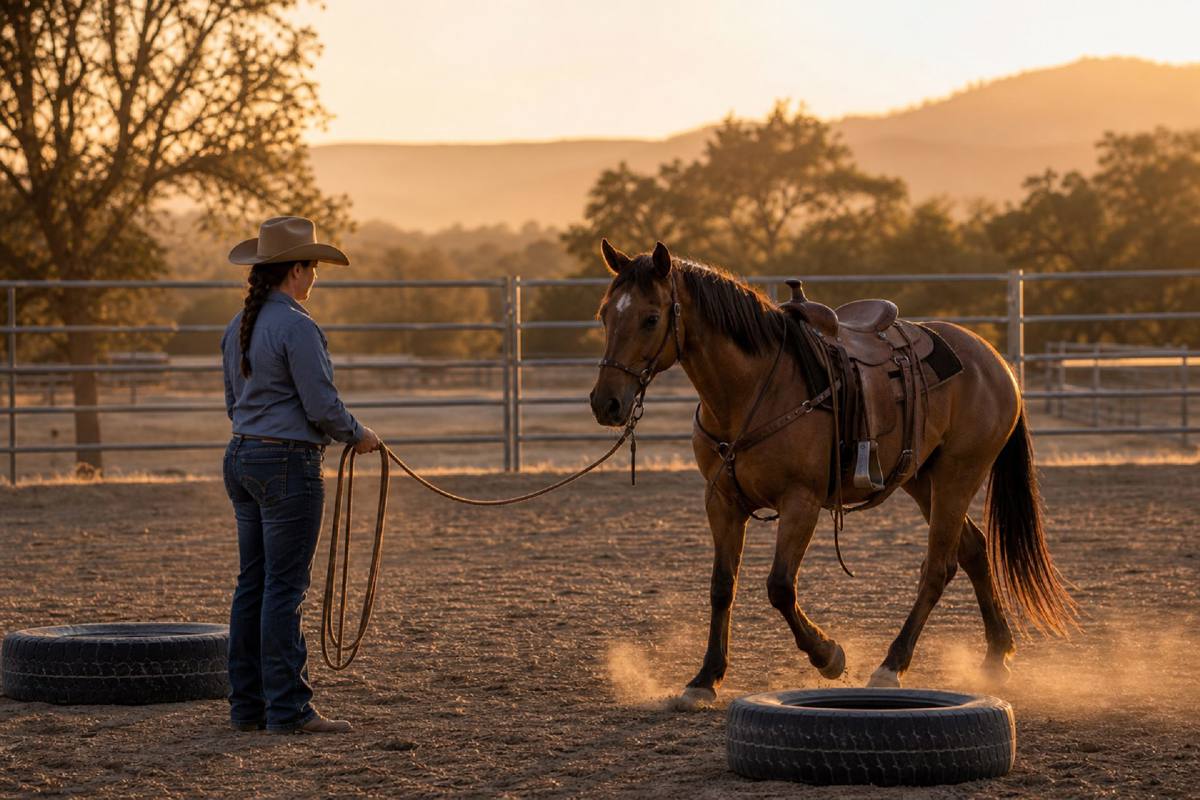
In this lesson recap, trainer Jeremy LaRose of ProHorseTrainer shows how he uses groundwork to prepare a young horse for the first rides. The big themes are safety, patience, and helping the horse figure things out instead of forcing every response.
Jeremy’s approach in Colt Starting 102 is not about rushing to the saddle. It’s about confirming that the horse can stay on a circle, move forward, soften through transitions, and keep his body organized before the rider asks for more. You can watch the source lesson here: Colt Starting 102.


What you need first
Before trying this progression, the horse should already have:
- been first saddled
- a basic understanding of forward motion and circling on the lunge
- enough handling to stay reasonably calm while equipment is introduced
Jeremy’s first-riding ideas also assume the horse can already jog under saddle before you start asking for more refined headset softness.
Main lesson: how Jeremy builds the foundation
1) Don’t rush the process
Jeremy starts by reminding viewers that every colt learns at a different pace. The goal is not to compare your horse to someone else’s timeline. Instead, he focuses on whether the horse is mentally present, physically organized, and safe to keep developing.
That mindset matters because this stage is where many horses either gain confidence or pick up confusion that follows them into the first rides.
2) Use the lunge line to confirm control before adding more equipment
Jeremy explains that the horse has to understand three things before the rubber strap or training tires become useful:
- stay on the circle
- move forward when asked
- yield the body without crowding the handler
Once those basics are in place, he can introduce more challenge without losing control. In his system, the new equipment is not the answer by itself; it simply increases the level of precision the horse has to learn.
Watch this segment on introducing the rubber strap.
3) Keep the shoulders and hind end organized
A major part of the groundwork is teaching the horse not to fall in with the shoulders or swap behind. Jeremy wants the horse to hold a clean shape around the circle rather than leaning on the line or drifting through the body.
He also points out that different strap placement can influence different parts of the horse:
- inside setup can help bring attention to the shoulders and keep the front end up
- outside setup can help keep the hip from swinging out and improve straightness
This is where the work starts to look like preparation for riding, even though it is still groundwork. The horse is learning to carry himself in a way that will make steering and balance easier later.
Watch the lunging-with-saddle segment.
4) Use transitions to build relaxation, not just motion
Jeremy repeatedly looks for a horse that can soften through transitions. He wants the colt to breathe, lick and chew, and settle into the work. If the horse braces, shakes his head, or rushes through the change, Jeremy doesn’t try to force a fake relaxation. Instead, he uses more repetition and more clarity.
His point is simple: relaxation has to come from understanding, not from pressure alone.
That same idea shows up later in the lesson when he talks about the horse’s behavior in the bridle. If the horse is unsettled through transitions, Jeremy reads that as feedback that more ground work is needed before the ride asks for the same thing.
Watch the headset softness segment.
5) Protect the horse’s straightness and your own space
Another major takeaway is that Jeremy is very deliberate about personal space. He wants the horse to stay out on the circle instead of leaning in and taking over the handler’s space.
That boundary is about more than manners. It supports the whole training system:
- the horse stays safer and more balanced
- the handler stays out of trouble
- the horse learns respect that will matter later in showmanship and under-saddle work
6) Add the outside strap when the horse starts getting clever
In the final section of the lesson, Jeremy uses the outside strap as a way to keep the horse honest through transitions and head movement. If the horse wants to get ahead of the line, shake his head, or change his shape in a way that would cause problems later under saddle, Jeremy uses the strap to remind him to stay organized.
He is careful not to turn every head toss into a fight. Instead, he treats it as information. If the horse is telling him the transition isn’t fully understood yet, the answer is more repetition on the ground rather than a bigger argument.
Watch the outside strap steering and transition control segment.
Practical takeaways
- Build the foundation slowly; the first few days matter more than speed.
- Don’t add equipment until the horse already understands forward, shape, and space.
- Use transitions to teach softness, not just to make the horse move.
- Stay focused on straightness: shoulders, hip, and head should each have a job.
- If the horse gets tense or mechanical, back up and make the question simpler.
- Groundwork should prepare the first rides, not replace them.
What to practice next
If you’re following Jeremy LaRose’s progression, the next steps are:
- Improve clean transitions on the lunge line.
- Confirm the horse can stay out on the circle without leaning in.
- Practice shape and straightness with the appropriate strap setup.
- Keep building relaxation so the horse can carry that softness into the bridle and, eventually, under saddle.
For riders working in western pleasure or colt starting, this episode is a strong reminder that the quiet horse is built long before the first ride.
Support this writer
If this article helped you, leave a one-time tip.


