
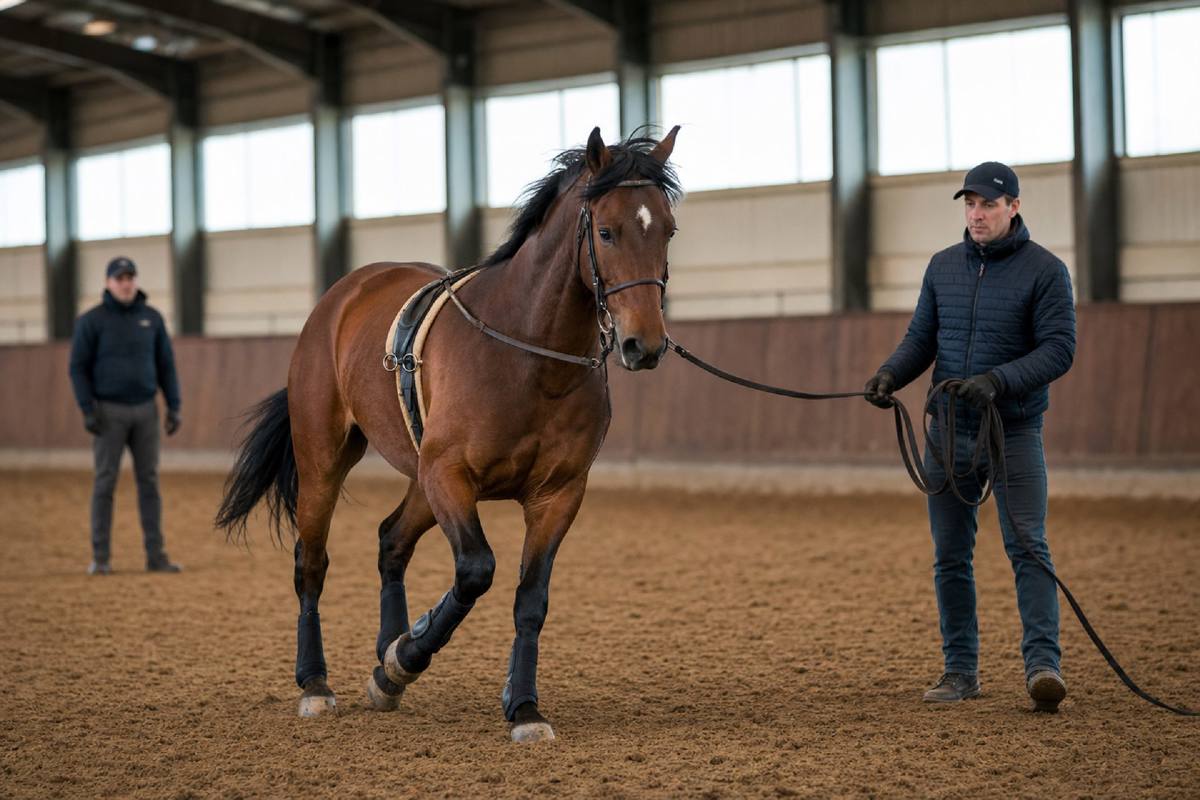
In this lesson recap from Jeremy LaRose of ProHorseTrainer, the focus shifts from lunge-line control to the next step in colt starting: getting a young horse to stay forward, stay organized between the aids, and begin respecting the rider’s ability to influence the shoulders. The big theme throughout the episode is simple but important: a horse that keeps moving willingly is safer, easier to steer, and much less likely to develop the habits that make later riding difficult.
Jeremy is working with a colt that already understands the circle, but is just starting to learn how to function with less obvious help from the center. That means the lesson is not about drilling precision for its own sake. It is about creating the right early picture: forward first, balance second, and only then more refined steering.


What you need first
This episode builds on a few basics before it makes sense to ride the same ideas under saddle:
- Lunging foundation: the horse should already understand the circle, rhythm, and how to stay organized at the end of the line.
- First ride / first-ride basics: the colt should accept a rider or begin that under-saddle phase before you ask for more detailed shoulder control.
- A safe setup with a helper in the middle or nearby, especially when the horse is still figuring out how to stay soft and forward.
If your horse is still learning to move calmly on the lunge, stay there first. Jeremy’s progression works because the horse already has a basic understanding of the job.
From lunge line to more independence
Jeremy starts by explaining why this stage matters: the colt is being asked to function with a little less support from the center. The helper is still present for safety, but the goal is to avoid depending on the circle holder for every step.
The horse should already be comfortable with the shape of the arena work, and that familiarity becomes an advantage. Instead of constantly correcting him, Jeremy wants the horse to keep the same general pattern while learning to carry more responsibility for forward motion and balance.
A major point here is that the horse should not learn to stop or stall when the setup changes. At this stage, hesitation is more dangerous than a little extra energy. Jeremy repeatedly emphasizes that a horse standing still, backing into pressure, or drifting toward the wall creates a much bigger problem than a horse that is simply eager and a little crooked.
Watch the episode on YouTube • Jump to the off-lunge section
Forward motion comes before fine steering
One of the clearest messages in the lesson is that forward motion makes steering easier. When the horse keeps his feet moving, the rider has more influence. When he stops, braces, or raises his head and locks up, the whole conversation gets harder and less safe.
Jeremy does not want to rely on stronger and stronger aids to drag the colt around. Instead, he wants the horse to learn that the rider’s voice, seat, and light leg can mean “go forward” without conflict. That forward response is what makes later steering possible.
He also notes that the colt needs to learn this early rather than after he has already developed a habit of leaning, bracing, or ignoring the aids. In other words, this is not just about getting motion today; it is about preventing the horse from building a future problem.
Keep the horse between your hands and feet
A core idea in the lesson is that the horse should stay between the rider’s hands and feet. That means the horse must respect the lane created by the aids instead of drifting out through the shoulder or falling in so far that the circle loses shape.
Jeremy explains that many riders make the mistake of trying to fix crookedness by pulling more on the inside rein. In his view, that often makes things worse. If the horse’s neck escapes to the inside, the outside shoulder tends to open and the rider loses the ability to manage the line of travel.
The better goal is to keep the horse’s head and neck centered enough that the shoulders stay available. That does not mean rigid or over-collected. It means the horse stays connected to the rider’s shape without falling through one side.
Why the outside shoulder matters
Jeremy repeatedly returns to the idea that steering is really shoulder control. The nose may point the way, but the shoulders determine whether the horse actually stays on the line.
If the horse tips his head too far in, he can escape through the outside shoulder. That is why the rider must think beyond the face and focus on the whole front end. Once the colt learns to yield the shoulder instead of leaning through it, the steering becomes much more reliable.
This is also why the lesson is so careful about not overusing the reins. If the horse is constantly held or shaped by the hand, he never learns to carry himself. Jeremy wants the horse to remain responsive without becoming dependent on heavy contact.
Watch the lunge-line foundation section
Use transitions to teach respect and forwardness
Jeremy’s next big focus is transitions. He wants the horse to respond to a combination of cues — voice, seat, leg, and timing — rather than waiting to be driven into the next gait.
The key is not just whether the transition happens, but how quickly and willingly it happens. Jeremy pays attention to:
- how many cues it takes,
- how much time passes before the horse steps up,
- and whether the horse stays soft through the change.
If the horse needs too much time or too much pressure, Jeremy treats that as feedback for the next repetition. If the horse gets it in a short, clean window, he rewards it.
That reward timing matters. Petting, praising, and letting the horse know he answered correctly are part of the training. The horse is not just being made to comply; he is being taught what earns release.
Why timing matters on a green colt
Jeremy is careful not to make the session long or exhausting. On a young horse, a short lesson with a clear win is more useful than a prolonged battle.
He points out that if the colt finishes the work understanding the pattern and still interested in coming back tomorrow, that is a success. The long-term goal is to build a horse that enjoys the job, not one that gets sour from overfacing.
The role of the helper in this stage
Although the horse is beginning to operate more independently, the helper in the middle still plays an important safety role. In this lesson, that support is especially important when the colt wants to stop, brace, or use his head and shoulders to avoid going forward.
Jeremy makes it clear that a horse at this stage should not be allowed to test the rider by shutting down. The helper is there to keep the horse honest and moving, which protects both the rider and the training plan.
That setup is temporary, but valuable. It allows the rider to focus on mechanics without having to win every argument alone.
Practical takeaways
- Forward motion is the foundation that makes steering safer and easier.
- Don’t try to solve shoulder control by overpulling the inside rein.
- Think of steering as shoulder management, not just nose position.
- Keep the horse between your hands and feet so he stays in your lane.
- Reward quick, willing transitions more than forceful ones.
- Short, positive sessions are better than long fights with a young horse.
- Use a helper when needed so the horse cannot develop dangerous habits while he is still green.
What to practice next
If you are following this progression, the best next steps are:
- Confirm your horse understands a basic lunge with rhythm and shape.
- Practice keeping him forward without overdriving him.
- Add transitions that come from light, clear cues.
- Watch whether he falls in or escapes through the outside shoulder.
- Begin asking for the same ideas under saddle only when the horse is ready for first-ride work.
Jeremy LaRose’s message in this episode is consistent from start to finish: get the horse moving, keep him between your aids, and protect the outside shoulder before the problems get bigger. That early discipline makes every later step in colt starting easier.
Watch the full video on YouTube
Support this writer
If this article helped you, leave a one-time tip.


