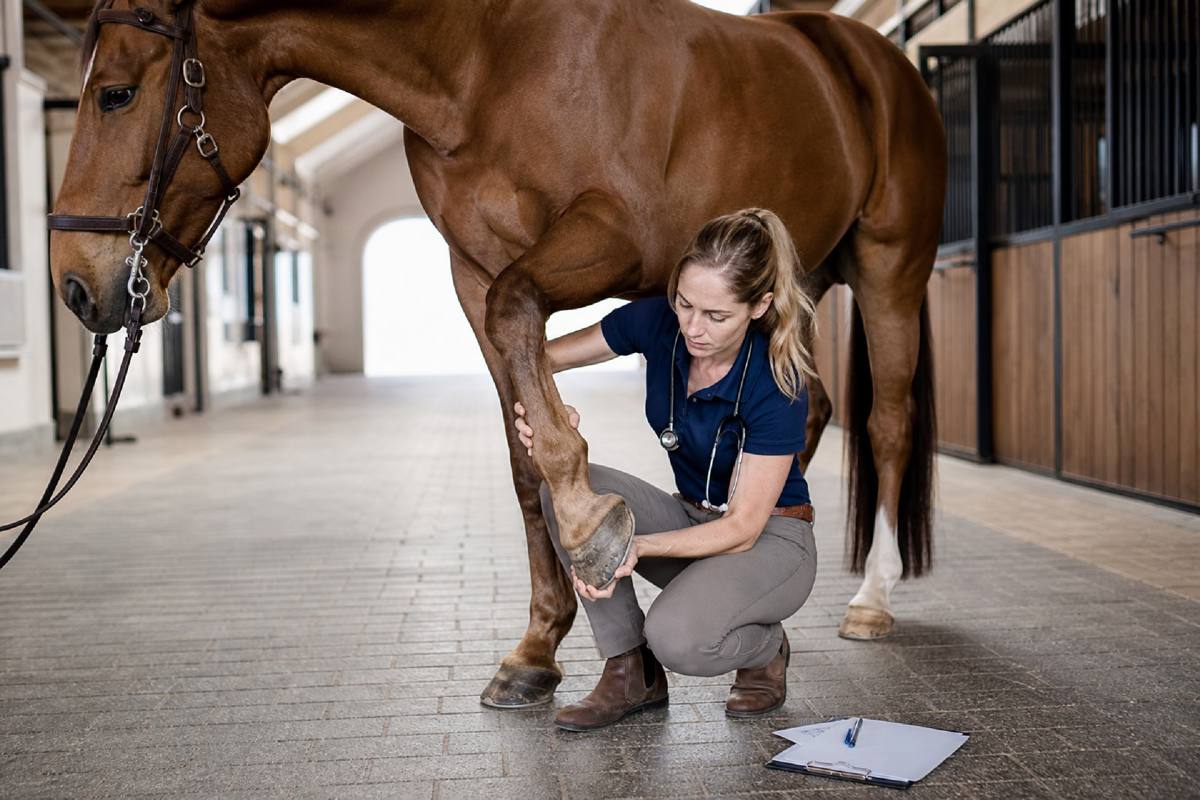
Many buyers ask one question after a PPE: "Did the horse pass?" That is the wrong frame. A PPE is about suitability for your intended job and your tolerance for maintenance risk. The details inside the report are where most decision mistakes happen.


Red flag #1: Context-free findings
A mild finding is not automatically mild for your use case. A horse aimed at lower-intensity trail work and a horse aimed at upper-level competition have different risk thresholds. Always ask your vet to interpret findings against your exact plan.
Red flag #2: Incomplete baseline imaging
When value or workload justifies it, skipping baseline radiographs can create expensive uncertainty later. If a concern appears after purchase, you lose the ability to compare "before" and "after" objectively.
Red flag #3: Soft-tissue assumptions
Normal movement in one exam does not rule out all soft-tissue concerns. Discuss whether ultrasound or targeted follow-up diagnostics are appropriate for specific history items or observed asymmetries.
Red flag #4: Sedation and timing gaps
- Ask whether sedation, recent medication, or schedule constraints could influence presentation.
- Confirm the horse was evaluated on appropriate footing and in representative conditions.
- Document any limits in scope so your decision reflects what was and was not assessed.
Red flag #5: No maintenance forecast
Even manageable findings can carry recurring cost. Ask for a probable 12- to 24-month maintenance outlook: shoeing implications, rehab risk, follow-up diagnostics, and workload constraints.
Questions buyers should ask before deciding
- What findings are likely noise vs. actionable risk for this job?
- Which findings could worsen under the expected schedule?
- What annual cost range should I budget if I proceed?
- What would make you re-check before closing?
The best PPE outcome is not "perfect." It is "informed."
Support this writer
If this article helped you, leave a one-time tip.


