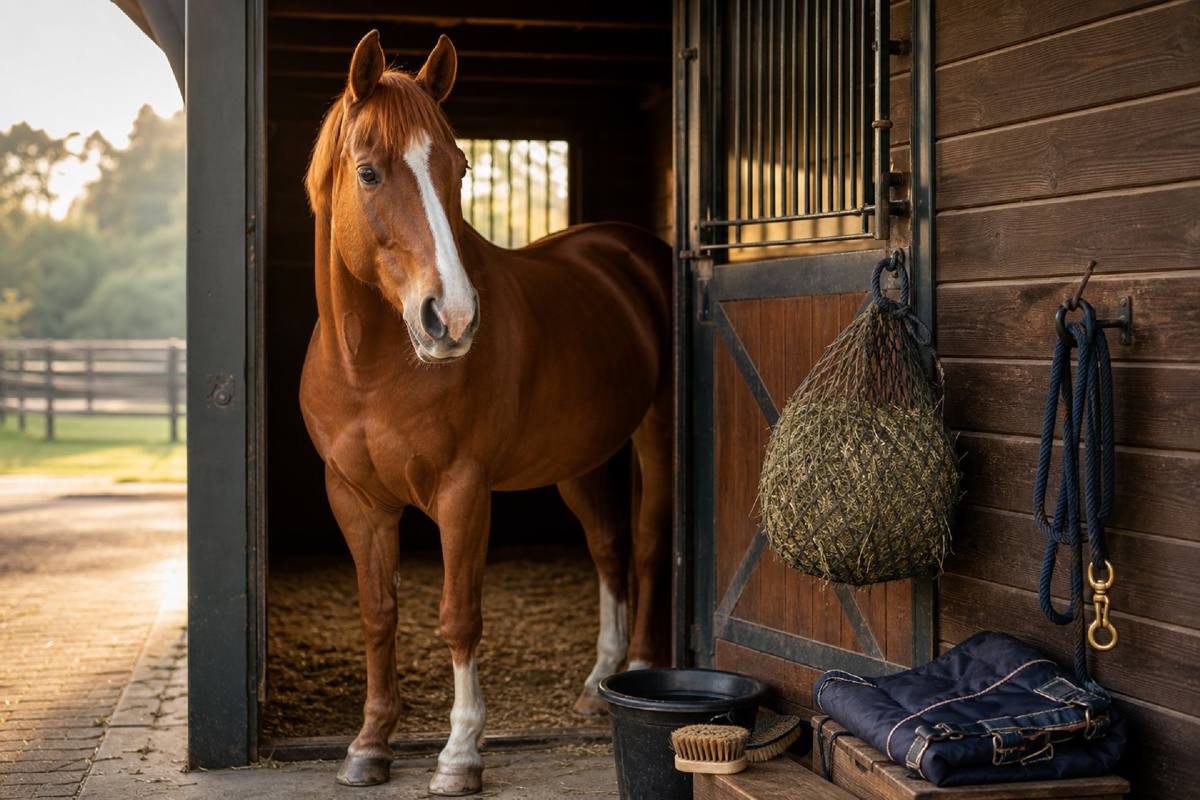
Owning a horse for the first time is exhilarating — and overwhelming. The learning curve is steep, but most of it can be broken down into consistent routines. Get the basics right and everything else becomes much more manageable.


Feeding and Forage
Horses are hindgut fermenters designed to graze for 16–18 hours a day. Forage — pasture, hay, or a combination — should make up the foundation of every horse's diet. A 1,100 lb horse typically needs at least 1.5–2% of its body weight in forage daily (roughly 16–22 lbs of hay). Concentrate feeds are a supplement, not a substitute. Always make dietary changes gradually to avoid colic and digestive upset.
Water
Fresh, clean water must be available at all times. An average horse drinks 8–12 gallons per day — more in hot weather or after heavy work. Check and clean water sources daily. In winter, use a tank heater to prevent freezing.
Farrier Care
Most horses need their hooves trimmed or shod every 6–8 weeks, depending on hoof growth rate, workload, and terrain. Neglecting hoof care leads to cracks, flares, and lameness. Build a relationship with a qualified farrier early and stick to a regular schedule.
Veterinary Schedule
- Vaccinations: Core vaccines (tetanus, Eastern/Western encephalomyelitis, West Nile, rabies) annually at minimum. Your vet may recommend risk-based vaccines based on your region and travel.
- Dental: Annual dental float to file sharp points that cause pain and affect chewing.
- Coggins/Health certificate: Required for travel across state lines.
- Deworming: Work with your vet on a targeted deworming program based on fecal egg counts rather than a fixed rotation schedule.
Shelter and Turnout
Horses need access to shelter from wind, rain, and extreme heat. A simple run-in shed in a pasture is sufficient for most horses. Daily turnout with other horses is essential for mental health — horses are herd animals and isolation leads to behavioral problems.
The best thing you can do in your first year of ownership is find a knowledgeable mentor — an experienced horse person at your barn who can answer the questions that arise between vet and farrier visits.
Support this writer
If this article helped you, leave a one-time tip.


